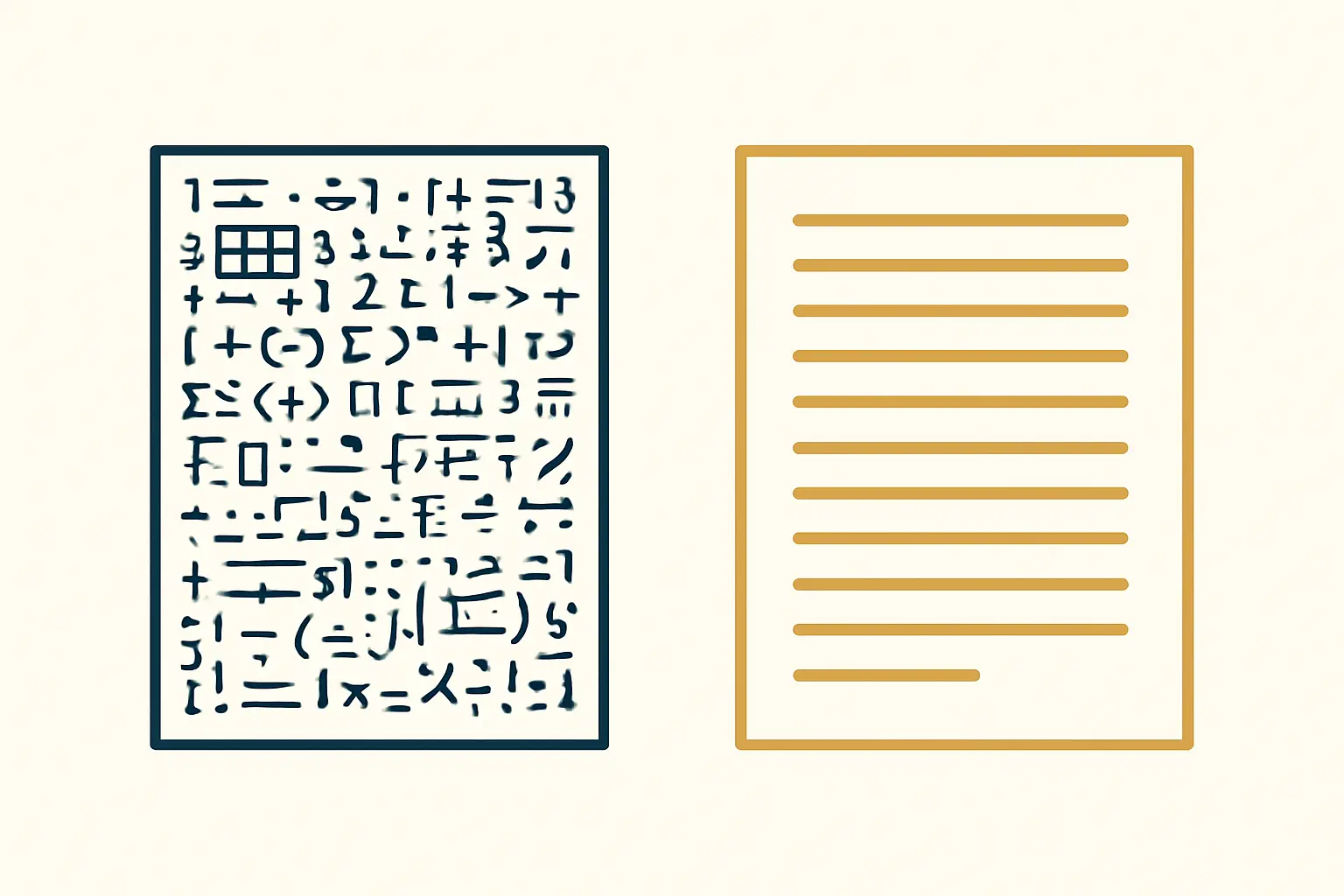
Your writing centre was staffed and trained to read prose — a sustained argument, a literature review, a discussion section built out of sentences and paragraphs. An engineering or physical-sciences thesis is a different kind of document: equations numbered and cross-referenced across chapters written years apart, figures and tables following a field-specific convention, notation that has to stay consistent from page four to page two hundred, and a reference style built around numbered citations rather than author-date prose. A generalist consultant trained on essays cannot meaningfully review whether your equation numbering is internally consistent, and that is not a training gap you can close with a workshop — it is a mismatch between what your support establishment was built to do and what this cohort’s documents actually need.
This is a provision mismatch, not a workload problem
It is tempting to read a struggling engineering candidate as a capacity issue — not enough supervisor time, not enough writing centre slots — and address it the way every other capacity problem gets addressed, by adding hours. That misses what is actually happening. The hours that exist are staffed by people whose expertise is prose argumentation, because that is what the overwhelming majority of a typical graduate school’s thesis traffic looks like. Pointing more of those same hours at a technical document does not help, because the failure mode in a technical thesis is rarely a weak argument sentence — it is a broken equation cross-reference, an inconsistent unit convention, a figure caption that does not match the department’s adopted style (IEEE, ACS, AIP or equivalent), or a document that has quietly drifted out of sync with itself across two years of edits. None of that is visible to, or fixable by, someone whose training is in reading arguments rather than checking structural consistency in a document built from equations and figures.
What a technical thesis actually contains that a prose-support model cannot see
Four categories of problem are specific to technical writing and effectively invisible to a generalist prose reviewer:
- Equation numbering and cross-reference integrity. A thesis with two hundred numbered equations, some referenced dozens of pages after they first appear, breaks silently when a chapter is reordered or a section is inserted — the kind of structural drift a prose reader has no reason to even check for.
- Notation and unit consistency. The same variable has to mean the same thing on page four and page two hundred, and a unit system has to stay consistent throughout — a check that requires domain fluency a writing-centre generalist does not have and was never expected to have.
- Field-specific figure, table and reference conventions. IEEE numeric citation style, ACS or AIP figure and table formatting, and discipline-specific conventions for reporting data are simply a different rulebook from the APA or Chicago prose conventions most writing-centre staff and generalist supervisors are trained on.
- Document assembly across a long, technically dense structure. Six chapters becoming one document breaks numbering, cross-references and figure captions in any long thesis, but a technical document carries far more of these numbered, cross-referenced objects per chapter than a prose-only thesis does, which means assembly damage is both more likely and harder to catch by eye.
The surface-versus-substance split still applies, and technical documents make it worse
Our analysis of what supervision time actually goes on — set out in your supervisors are spending review time on formatting, not argument — found that a large share of supervisor comments on any thesis are surface defects: reference drift, structural drift, assembly damage. A technical thesis does not escape that problem; it compounds it, because it simply has more numbered, cross-referenced objects per page for structure to drift across. An engineering supervisor tagging their own comments would very likely find an even higher surface share than the cross-disciplinary baseline that piece describes, precisely because equations, figures and tables multiply the opportunities for the document to quietly break itself as it grows. This article is not re-arguing that split; it is naming the second, discipline-specific reason your existing support establishment cannot close it for this cohort — the split exists everywhere, but the reviewer who could fix it in a technical thesis is a different person from the reviewer who fixes it in a humanities one, and your writing centre generally only has the second.
The tooling gap compounds the reviewer gap
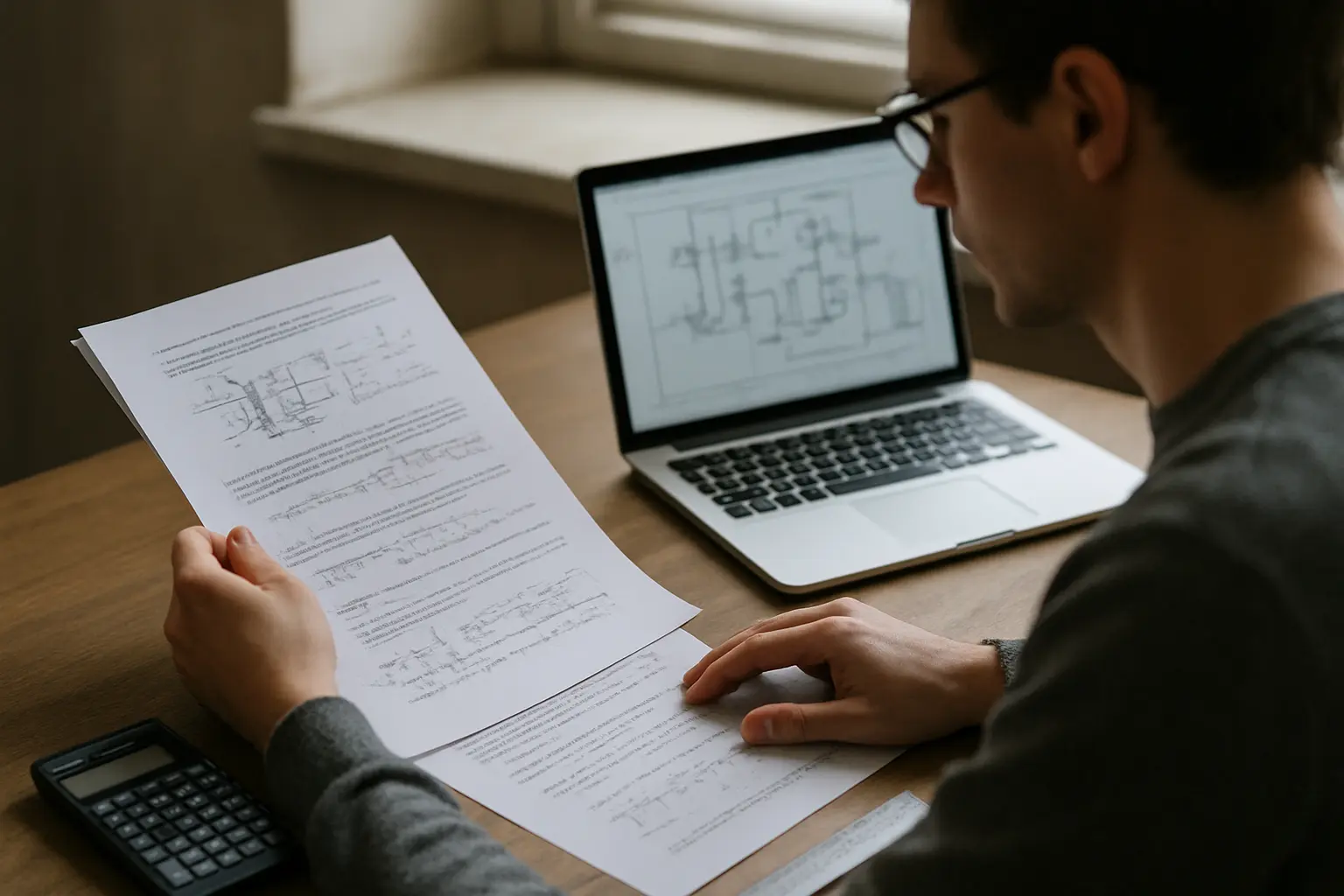
Many engineering and physical-sciences candidates write in LaTeX rather than Word, precisely because LaTeX handles equation typesetting, automatic numbering and cross-referencing far better than a word processor does at the scale a technical thesis requires. That is the right tool for the document, but it introduces a second, separate support gap: a writing centre staffed to help with Word documents often has no one who can meaningfully troubleshoot a broken LaTeX compile, a bibliography-management conflict between a .bib file and the department’s citation style, or a figure that renders correctly in a draft PDF but breaks in the final compiled thesis. A candidate hits this kind of problem at exactly the moment they most need help — close to a chapter deadline, mid-compile, with an error message that means nothing to a generalist reader — and the support establishment built for prose has no answer for it, regardless of how many hours it is staffed.
Where Tesify for Institutions fits
Feature by feature, and honestly about what it does and does not cover for a technical document:
- Structural consistency held automatically as the document grows. Chapter, section, figure, table and equation numbering stays coherent across a long, edited-over-years document, which is exactly the class of defect that multiplies in a technical thesis relative to a prose one. Removes: the silent breakage that happens when a technical document is reordered or assembled from separate files.
- Referencing held consistent, including numeric citation styles. The same reconciliation problem that affects author-date referencing in a humanities thesis affects numbered citation lists in an engineering one, and it is handled the same way. Removes: the end-of-process citation-numbering reconciliation that a long reference list makes especially painful.
- Visible progress and structural state for a supervisor, so a technical supervisor spends their scarce review time on the engineering or physics content rather than re-checking whether the document still hangs together structurally. Removes: the need for a supervisor to manually audit structure before they can even start reading for content.
What it explicitly does not do: it does not check whether an equation is mathematically correct, whether a unit conversion is right, or whether a figure actually shows what the caption claims. Those remain, and should remain, a technically qualified supervisor’s job — the honest claim here is narrower than that. What the platform removes is the structural noise that currently eats into the time a technical supervisor has left over for the parts of the thesis that only they can actually judge, which is the part of their limited attention a graduate school most needs protected.
The next step is a pilot, not a purchase order
A free departmental pilot, run in one engineering or physical-sciences department for a term, is the way to test this claim against your own documents rather than take it on our word. Take the same comment-tagging baseline described in the formatting-versus-argument analysis, run it specifically against technical theses, and compare the surface share before and during the pilot. The pilot design itself is scoped in our guide to running a departmental pilot of an AI writing tool, and the data protection review can run in parallel using our DPIA sequence rather than after it. Candidates in the later stages of a technical candidature are also the ones most exposed to this gap, since a structural or referencing problem discovered close to submission has the least runway to absorb it — the same population described more generally in the support gap for your longest-registered candidates.
Request an institutional evaluation and we will scope a pilot against your own engineering or physical-sciences department’s thesis structure and current supervision model.
Frequently asked questions
Does this check whether an equation or calculation is correct?
No. It holds structural consistency — numbering, cross-references, referencing — but mathematical and scientific correctness remains a technically qualified supervisor’s responsibility, and that division of labour is deliberate.
Does it support field-specific citation styles like IEEE numeric format?
Yes, referencing is held consistent for numbered citation styles as well as author-date styles; the mechanism is the same whether the field convention is IEEE, ACS, APA or another adopted style.
What does a Tesify for Institutions licence cost?
Pricing is scoped per institution against department size and modules required; the free departmental pilot establishes fit and value before any procurement conversation begins.
Where is student data processed, and does this meet GDPR and FERPA obligations?
Data residency and processing terms are confirmed per institutional agreement, covered explicitly in the DPIA sequence run alongside a pilot rather than asserted generically here.
How much IT integration does a pilot require?
Minimal. A departmental pilot does not require SSO or LMS integration to evaluate, which is why it can start inside a single engineering or physics department without a full IT project.
Does this replace the need for a technically qualified supervisor?
No. It removes structural noise from a supervisor’s review load so their time goes further on the technical content only they can judge; it does not substitute for their subject expertise.
Why is this different from the general formatting-versus-argument problem covered elsewhere on this site?
The underlying comment-tagging finding applies everywhere, but the fix for a technical thesis requires structural tools that understand equation and figure-heavy documents specifically, and the person who could otherwise fix it by hand is a subject-expert supervisor, not a generalist writing-centre consultant.
Does this affect academic integrity for engineering and physics theses?
No. Keeping the candidate’s own contribution legible, including the technical content only they and their supervisor can verify, is what an integrity policy requires, and structural consistency makes that easier to demonstrate rather than harder.
Does this help candidates writing in LaTeX rather than Word?
Structural and referencing consistency is the layer this addresses regardless of the underlying authoring tool; a department that has separately identified LaTeX-specific troubleshooting as a support gap should treat that as a distinct, complementary need rather than one this solves on its own.
Why can’t the writing centre simply hire someone with an engineering background?
Some larger institutions do, but it is a narrow, hard-to-recruit specialism relative to general writing-centre staffing, and a single technical reviewer still cannot cover the full range of sub-disciplines a physical-sciences or engineering faculty produces theses in. Structural tooling scales across all of them at once in a way one additional hire cannot.