
A Special Education program that lets thesis topics accumulate informally — a supervisor’s personal list here, a leftover slide from an old orientation there — ends up with the same topic proposed by two students in the same cohort, a promising area nobody ever tells students exists, and no record of what has already been done when accreditation review asks for evidence of research-topic diversity across the program’s licensure strands. An approved, governed thesis-topic bank fixes this with a document and a workflow, not a bigger list. This is a step-by-step build, not a one-off list to publish and forget, and it sits alongside the same kind of calibration work this site has documented for departmental writing standards and consistent marking on extended written work: a governance artefact a program builds once and maintains, rather than a document one coordinator quietly owns until they leave.

Step 1: Name an owner and a review cadence
Assign the topic bank to a specific role — typically the program coordinator or a standing curriculum/research committee — rather than leaving it as an unowned shared document. The owner’s job is threefold: approve new topic entries before they go live, retire entries that have gone stale or been claimed, and produce the audit trail an accreditation reviewer or new department chair will eventually ask for. Set a fixed review cadence — once per term is typical for a program running a rolling thesis cohort — rather than reviewing only when someone happens to notice a problem.
Step 2: Inventory what already exists before adding anything new
Before a single new topic goes into the bank, pull every thesis title completed or currently in progress across the program’s full history, not just the current cohort’s working list. This inventory is the artefact that prevents the single most common failure of an ungoverned topic list: two students independently proposing near-identical projects because neither had visibility into what a student two cohorts ago already completed. Where the program has distinct licensure strands — early childhood special education, learning disabilities, autism spectrum support, behavioural intervention — tag each existing title by strand, since duplication risk and topic gaps both tend to cluster within a strand rather than across the whole program.
Step 3: Build a submission-and-vetting workflow for new topics
A topic bank stays current only if faculty have an easy, low-friction way to submit a new candidate topic and a clear rule for what happens next. A workable minimum: a short submission template (working title, strand, one sentence on the specific gap it fills, the faculty member proposing it and, if known, who could supervise it), a single approval step by the topic-bank owner rather than a full committee vote for every entry, and a standard turnaround time so a submitted topic does not sit in limbo for a semester. The vetting step’s only real job is checking the new topic against the Step 2 inventory for duplication — not re-litigating whether the topic is a good idea, which stays a supervisor-and-student conversation once the topic is claimed. This single-approval-step design deliberately keeps the topic bank lighter than a full proposal-review workflow: this site’s piece on structuring a nursing faculty’s proposal-review workflow covers the heavier committee process a full research proposal goes through once a topic is claimed and developed, which is a separate, later gate from simply getting a candidate topic into the bank in the first place.
Step 4: Map each topic to supervisor capacity and expertise
A topic bank that lists interesting questions with no named or plausible supervisor attached generates disappointment, not proposals: a student who commits time to developing a proposal around a listed topic, only to learn no one on faculty can actually supervise it, loses real time. Tag each bank entry with either a named potential supervisor or, where the program prefers not to pre-assign, the specific faculty expertise area a supervisor would need. Cross-check this tagging against actual current supervision loads — a topic tagged to a faculty member already at capacity should be flagged or temporarily hidden rather than left live and misleading.
Step 5: Version-control and timestamp every entry
Each entry needs a visible added-date and a status field — open, reserved, claimed, or retired — updated the moment a student commits to it, not weeks later when someone remembers to update the document. A topic bank published as a static PDF refreshed twice a year will already be wrong by the time the second cohort reads it; a shared, centrally editable document (or a simple database, if the program has access to one) that the owner updates as claims happen keeps the “open” list honest in real time, which is the entire point of a governed bank over an informal list.
Step 6: Publish a clearly labelled shortlist each term, not the whole archive
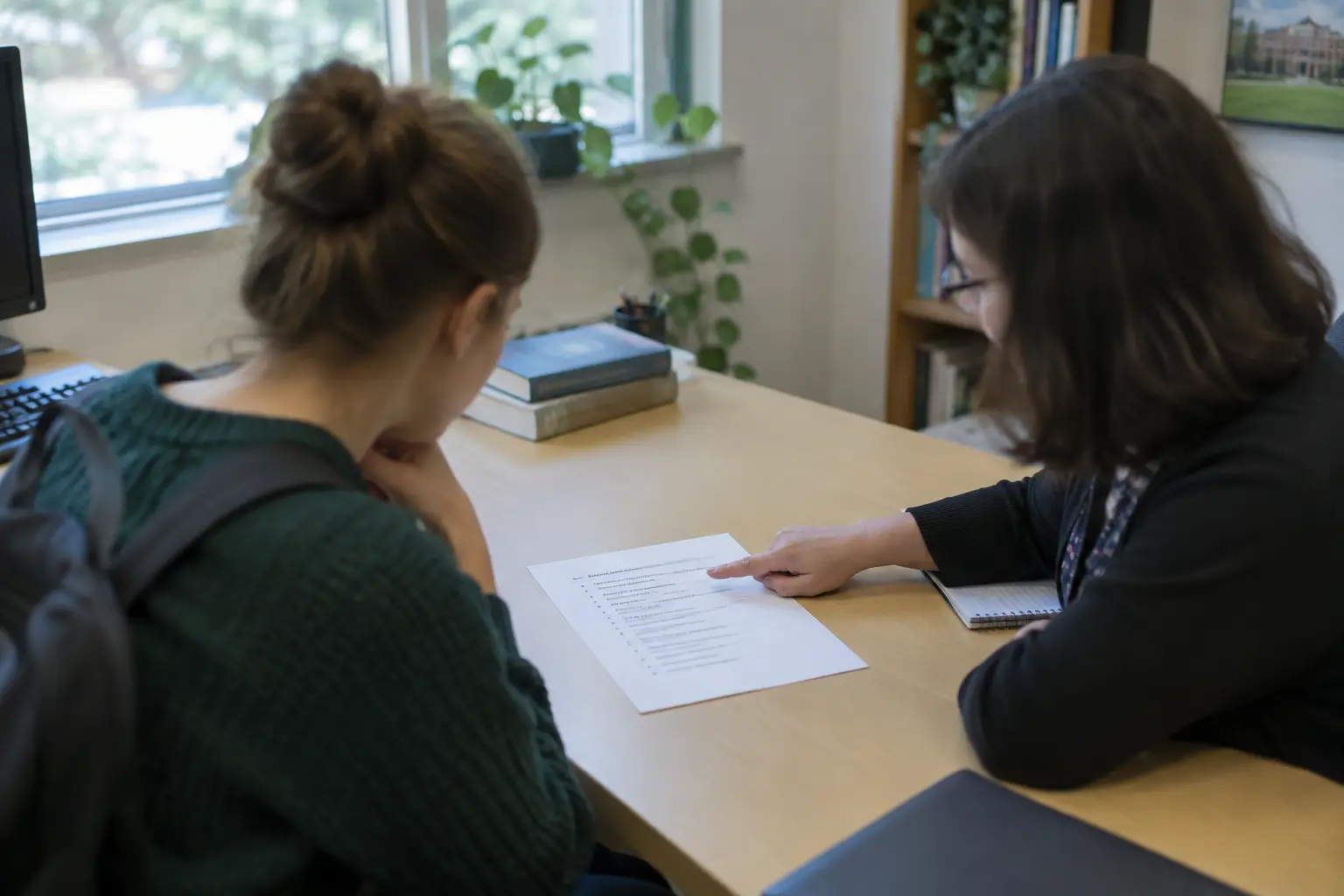
Students should see a live, current shortlist of open topics for the coming term, not the full historical archive with its retired and claimed entries mixed in. Publishing the whole archive undifferentiated recreates the exact confusion the bank is meant to solve. A short, dated shortlist — ten to twenty currently open entries, refreshed at the start of each term — is more useful to an incoming cohort than an exhaustive but unfiltered list, and it is the version worth putting in front of students in an orientation meeting.
Step 7: Prune and retire aged topics on a fixed schedule
A topic that has sat open for several terms without a student claiming it is usually telling the program something — the framing is unclear, the required supervisor expertise is scarce, or the question has been overtaken by newer literature. Build retirement into the same review cadence as Step 1 rather than letting stale entries accumulate indefinitely: either refresh the framing, reassign it to a different strand, or formally retire it with a note on why, so the next review does not re-litigate the same question from scratch.
Step 8: Keep the audit trail an accreditation or programme review will ask for
The governance workflow itself — who approved which topic, when, and why a topic was retired — is the artefact a program review or accreditation self-study will eventually want evidence of, particularly for a claim about research-topic diversity across licensure strands or about how the program prevents duplicate research effort. Keep this trail as a simple log alongside the bank rather than reconstructing it retroactively under review pressure; a program that can produce this log immediately is demonstrating exactly the kind of internal quality process a reviewer is looking for, regardless of the specific accrediting body involved. In practice the log needs only four fields per entry — the date a topic was added, who approved it, the date it was claimed or retired, and a one-line reason for retirement where applicable — and a program that captures these four fields consistently from the start will find, several accreditation cycles later, that reconstructing five years of topic-governance history is a five-minute export rather than a weeks-long forensic exercise across old email threads and departed coordinators’ personal files.
A related failure mode worth naming explicitly: a topic bank that exists but is never actually consulted, because students and even some faculty do not know it exists or have stopped checking it after an early version went stale. The fix is procedural rather than technological — introduce the current shortlist at the specific orientation session where students first start thinking about a thesis topic, reference it again at the proposal-development stage, and have the topic-bank owner flag any newly claimed topic to the relevant supervisor directly rather than relying on the supervisor to check the bank unprompted. A governance document that lives only in a folder no one opens delivers none of the duplication-prevention or capacity-matching benefit described above, however well the underlying workflow is designed.
How this differs from a curated exemplar library
A thesis-topic bank and an exemplar-thesis library solve two different problems and a program should not conflate them. This site’s piece on governing an exemplar thesis library covers curating a set of completed, high-quality theses so future students can see what a strong finished product looks like — a model-and-standard artefact. A topic bank is a forward-looking allocation tool: it exists to prevent duplication and surface open research questions before a student starts writing, not to showcase what a finished thesis reads like. A mature Special Education program will eventually want both, but they are built, owned and updated on different cycles — the exemplar library updates only when a new thesis clears the bar for inclusion, while the topic bank updates continuously as topics are claimed and retired — and a single combined document trying to do both jobs tends to do neither well.
A note on scale for a smaller program
Not every Special Education program runs a large enough thesis cohort to justify a database or a dedicated committee for this. For a smaller program — a single cohort of a dozen or fewer candidates a year — the same eight steps still apply, just at a smaller scale: the owner can be one person rather than a committee, the inventory can be a single shared spreadsheet rather than a database, and the termly review can be a fifteen-minute standing item in an existing faculty meeting rather than a separate process. What should not shrink along with program size is the discipline itself — a small program skips the inventory step at exactly the moment two students in the same tiny cohort are most likely to independently propose the same topic, because they know each other and are drawing on the same limited pool of faculty conversations for inspiration.
Where Tesify fits
None of the ownership, vetting or accreditation-evidence decisions above are ones a writing platform makes — they stay with the program coordinator and faculty. Tesify comes in only after a student has claimed a topic from the bank: it is a thesis-writing workspace already used by 9,000+ students across more than 15,000 chapters, and every chapter in it is 100% written by the candidate. For a program coordinator, the relevant question is simply whether that authorship position fits the program’s own supervision and integrity expectations before recommending it to a cohort.
Frequently asked questions
Who should own a Special Education program’s thesis-topic bank?
A single named role — typically the program coordinator or a standing curriculum/research committee — responsible for approving new entries, retiring stale ones, and maintaining the audit trail, rather than an unowned shared document anyone can edit without oversight.
What is the first step before adding new topics to a bank?
Inventory every thesis title completed or in progress across the program’s full history, tagged by licensure strand where the program has distinct strands, so duplication and topic gaps are both visible before a single new entry is approved.
How do you prevent a topic bank from listing topics no one can actually supervise?
Tag each entry with a named potential supervisor or the specific faculty expertise it requires, and cross-check that tagging against actual current supervision loads so a topic tied to an already-committed faculty member is flagged or hidden rather than left live.
How often should the bank be reviewed?
On a fixed cadence tied to the program’s cohort cycle — once per term is typical for a rolling thesis cohort — rather than only when someone happens to notice a duplication or a stale entry.
Should students see the full historical archive or just current open topics?
A short, dated shortlist of currently open topics only, refreshed at the start of each term. Publishing the full archive with retired and claimed entries mixed in recreates the confusion a governed bank is meant to solve.
What happens to a topic that sits unclaimed for several terms?
It should be reviewed on the same fixed cadence as the rest of the bank and either reframed, reassigned to a different strand, or formally retired with a documented reason, rather than left indefinitely on the open list.
Why does an accreditation review care about a thesis-topic bank?
The governance workflow itself — who approved which topic and when, and why entries were retired — is direct evidence of an internal quality process, useful for a self-study claim about research-topic diversity across licensure strands or about preventing duplicate research effort.