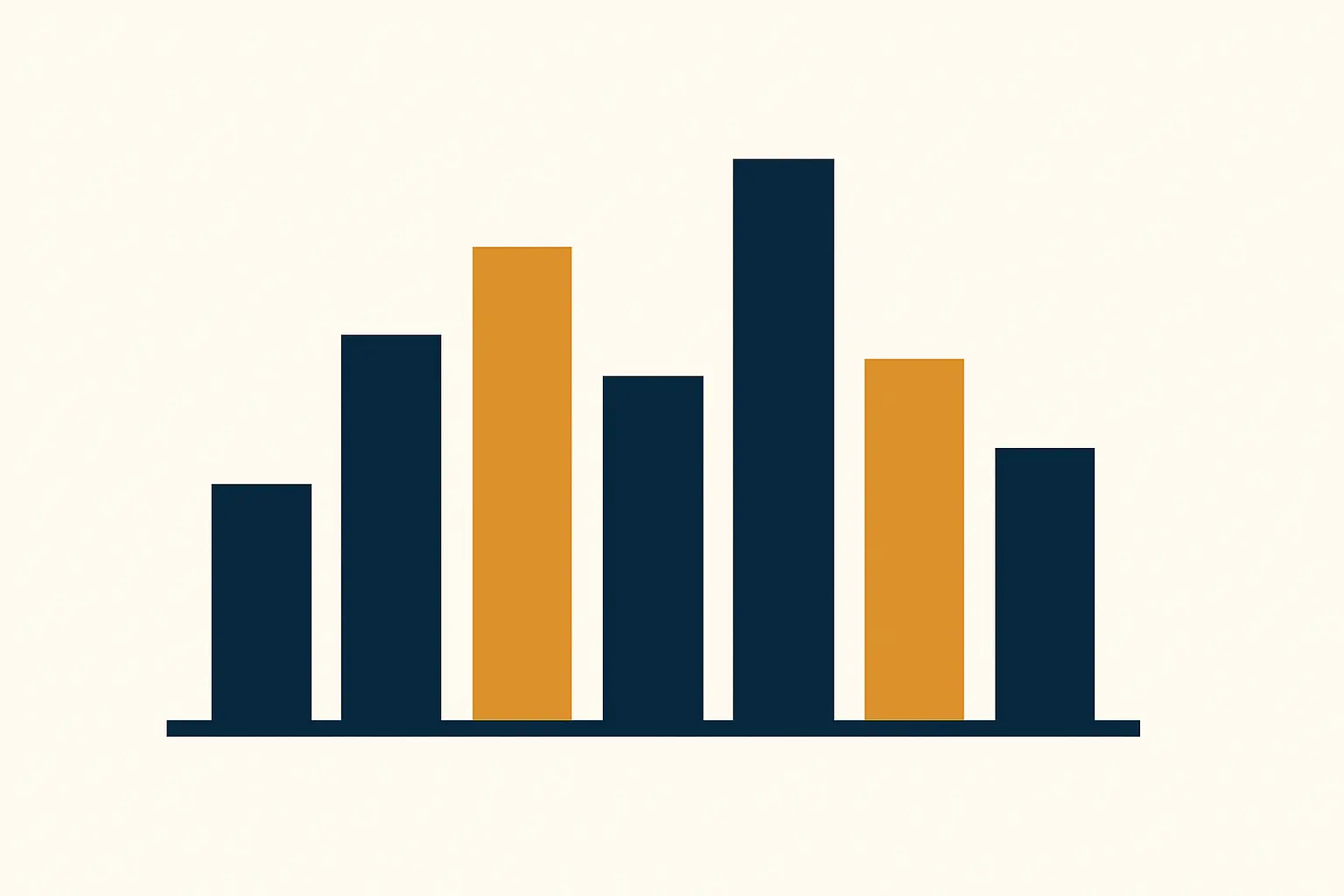
The headline finding: thesis length conventions vary by a factor of six or more across countries and degree levels, and the single most consequential lever for an institution setting its own regulation is not the word cap itself but whether the thesis follows a monograph or a cumulative, publication-based structure — a choice that changes the expected length by a wider margin than any plausible cap adjustment.
Documented national conventions, drawn from published university and country-level guidance: in Canada, undergraduate papers run to roughly forty pages, master’s theses to around one hundred, and PhD theses commonly exceed two hundred — a 2021 Quebec study put the average master’s thesis at 127.4 pages and the average PhD at 245.6. German bachelor’s theses run 40–60 pages and Diplom or master’s theses 60–100. French doctoral theses carry an informal, non-formal minimum of around 100 pages. Spanish doctoral dissertations average around 250 pages. Portuguese and Brazilian master’s theses run 60–80 pages and PhDs 150–250. UK institutions set their own word limits by faculty and department rather than following a national convention, which is precisely the design choice this article is about.
Length conventions by country and level
| Country / system | Bachelor’s | Master’s | Doctoral |
|---|---|---|---|
| Canada | ≈40 pages | ≈100 pages (127.4 avg, 2021 Quebec study) | 200+ pages (245.6 avg) |
| Germany | 40–60 pages | 60–100 pages (Diplom/Master) | Varies widely by Fach; monograph or cumulative |
| France | — | — | ≈100 pages informal minimum |
| Spain | — | — | ≈250 pages average |
| Portugal / Brazil | — | 60–80 pages | 150–250 pages |
| UK | Set per institution/faculty | Set per institution/faculty | Set per faculty/department, no national figure |
Two things follow immediately from this table. First, no single institutional word cap imported from another country’s convention is defensible without adjustment — a policy borrowed from a Canadian benchmark and applied to a UK humanities faculty will be roughly half the length that faculty’s own examiners expect. Second, within every one of these systems the doctoral range is wide enough that a university-wide cap is doing very little work; the variation inside a single country is often larger than the variation between countries.
The bigger lever: monograph versus cumulative structure
The choice between a traditional monograph thesis and a cumulative, publication-based thesis (a “thesis by publication”, built around a set of published or publication-ready papers with a connecting introduction and discussion) changes expected length by a far wider margin than any cap adjustment a committee is likely to approve. A cumulative thesis in a science or engineering field is routinely built around three to five journal-length papers plus a synthesising framework, producing a document that is a fraction of the length of a monograph covering equivalent research — the papers themselves already carry the peer-reviewed detail, so the thesis does not repeat it.
This is why STEM theses have converged toward shorter documents even as humanities and law theses have not: the cumulative model has become the default or an accepted option in most science, engineering and increasingly social-science departments, while law and the humanities remain overwhelmingly monograph disciplines where the thesis is the single sustained argument, not a synthesis of separately published units. A length policy that does not explicitly distinguish the two routes is comparing documents that were never meant to be the same length in the first place.

What actually drives the STEM-versus-humanities gap within one route
Even holding the monograph route constant, three structural factors explain most of the remaining difference between a humanities and a natural-sciences thesis of the same degree level. A humanities or law thesis typically carries its evidentiary base — primary-source quotation, close textual analysis, case law — inside the body of the argument, so the evidence and the argument are the same prose. A natural-sciences thesis externalises much of its evidentiary base into tables, figures and appendices that are conventionally excluded from a word count, so two documents that read as similar in scholarly weight can differ by tens of thousands of words purely because of what counts toward the limit. And a humanities thesis is judged in significant part on the quality of sustained written argument itself, which is the object being examined, while a sciences thesis is judged primarily on the research contribution, with the writing functioning as a report of it rather than as the object of examination.
Building a defensible institutional length policy
Four decisions turn a single university-wide word cap into a policy that survives scrutiny from both a physics department and a law faculty.
- Set the cap per faculty, not per institution. A single university-wide figure is either too long for the sciences or too short for the humanities and law; there is no number that serves both well, which is exactly what the country-level table above demonstrates at a larger scale.
- Publish what counts toward the limit. State explicitly whether appendices, bibliography, footnotes and published-paper reprints are included or excluded, since this single definitional choice moves the effective limit by a large margin without changing the stated number at all.
- Set separate rules for the monograph and cumulative routes rather than one cap that a cumulative thesis will always undershoot and a monograph will always strain against. A cumulative-route policy should specify the expected number and status of included papers rather than a word count at all, since the papers themselves are already length-regulated by their target journals.
- Review on a fixed cadence tied to discipline norms, not a fixed calendar date — publication practices in a field shift (a discipline moving toward cumulative theses, a journal changing its typical article length) faster than most institutional policy review cycles catch, so the trigger for review should be a change in disciplinary convention, observed via examiner feedback, rather than a static five-year clock.

What happens when a submission breaches the policy
A length policy is only as useful as its enforcement path, and most institutions under-specify this part relative to how much attention the number itself receives. Three mechanisms cover the practical cases a graduate school will actually encounter. A hard submission gate — the thesis management system refuses to accept a file over the stated limit — is the cleanest mechanism where the institution can build it, because it removes any ambiguity about whether a breach was noticed before or after examination. Where no automated gate exists, a pre-viva compliance check by the graduate school administrator, run against the published definition of what counts toward the limit, catches the case before an examiner’s time is spent on a non-compliant document. And for the case that reaches an examiner regardless — a thesis that is over length but otherwise ready for examination — the policy should state explicitly whether the examiner may proceed and require a reduction as a minor correction, or whether the viva itself is deferred until the document is brought into compliance; leaving this undefined is what produces disputed cases, because different examiners will otherwise make different calls on materially similar submissions.
The reverse case — a thesis substantially under the expected length for its route — is procedurally simpler but strategically more important to define, because it is usually not a length problem at all. A monograph thesis that is unusually short is far more often a signal that the work itself is thin than that the writing is efficient, and a policy that treats short length as automatically acceptable removes an early warning signal a supervisory panel would otherwise have caught months before submission.
Where this connects to the wider provision plan
A length policy interacts directly with the supervision-capacity model built on field-level enrolment data in postgraduate enrolment by field of study: a faculty that moves from a monograph to a cumulative-thesis default changes not only the expected page count but the supervision pattern itself, since a cumulative thesis is typically reviewed paper by paper across the candidature rather than as one document at the end. The staff side of that capacity question is set out in how many postgraduates and how many staff to supervise them, and the output-side question — how many theses a system actually produces each year, and by what definition of “thesis” — is addressed in the free field-by-field count of doctoral theses. Length regulation is also a natural place to align with the broader question of how coursework and doctoral-level AI governance differ, covered in how AI rules should differ for a doctoral thesis compared with coursework, since a shorter cumulative thesis and a long monograph carry very different exposure to the drafting-assistance questions that policy addresses.
If you would like help mapping a length policy against your own faculty structure and route mix, request an institutional evaluation and we will work from your existing regulations rather than a generic template.
Frequently asked questions
Is there a standard international word limit for a PhD thesis?
No. Conventions are set nationally or, in systems like the UK, per faculty and department, and vary by a factor of six or more across countries and levels — there is no single defensible international figure.
Why do science theses tend to be shorter than humanities theses?
Three structural reasons: sciences increasingly use a cumulative, publication-based structure that is inherently shorter than a monograph; sciences externalise evidence into excluded appendices and figures; and a humanities thesis is judged partly on the sustained written argument itself, which a sciences thesis is not.
What is a cumulative or publication-based thesis?
A thesis structured around a set of published or publication-ready papers, connected by a synthesising introduction and discussion, rather than one continuous monograph. It is the default or an accepted option in most science and engineering departments and increasingly available in social sciences.
Should appendices and bibliography count toward a word limit?
There is no universal answer, but the policy must state its choice explicitly. This single definitional decision changes the effective length limit by a large margin without changing the published number, so leaving it unstated invites dispute at examination.
How often should an institutional length policy be reviewed?
On a cadence triggered by observed shifts in disciplinary convention — a field moving toward cumulative theses, or examiner feedback that a cap no longer fits practice — rather than a fixed calendar date that may lag years behind the change it should be responding to.
Where does the Canadian page-count data in this article come from?
A 2021 Quebec study of submitted theses, cited alongside general Canadian degree-level conventions of roughly forty pages for undergraduate work, one hundred for a master’s thesis, and over two hundred for a PhD.
Do UK universities publish a national thesis word limit?
No. UK institutions set word limits individually, by faculty and department, which is why a UK-wide benchmark does not exist and each institution’s own regulations are the only authoritative source for its own theses.
Does a shorter cumulative thesis mean less rigorous examination?
No. The rigour shifts location rather than disappearing: each included paper has typically already passed peer review at a journal, and the synthesising framework is examined for how well it connects and contextualises that already-reviewed work, rather than repeating the detailed evidentiary case a monograph carries internally.
What should happen if a thesis exceeds the word limit before the viva?
The policy should state explicitly whether an examiner may proceed and require a reduction as a minor correction, or whether the viva is deferred until the document is brought into compliance. Leaving this undefined produces inconsistent decisions across otherwise similar cases.
Is a thesis that comes in well under the expected length a problem?
Usually yes, for a monograph route in particular. Unusually short length is far more often a signal that the underlying work is thin than that the writing is unusually efficient, and it is worth flagging to the supervisory panel well before submission rather than treating it as automatically acceptable.