
A Nursing faculty should frame a telehealth-adoption thesis around a specific implementation question — who adopts or resists a specific telehealth service, under what workflow and regulatory conditions, and with what measured outcome — rather than a broad “telehealth in nursing” survey. The framing, ethics review and supervision plan differ from a general clinical thesis because telehealth work touches technology adoption, cross-jurisdiction regulation and data privacy simultaneously. This is a distinct job from this site’s existing Nursing pieces on comparing ethics-review and IRB platforms and structuring a proposal-review workflow: those cover process infrastructure that applies across any Nursing thesis topic, while this piece is about how one specific, fast-moving hot topic should be framed within that existing process.
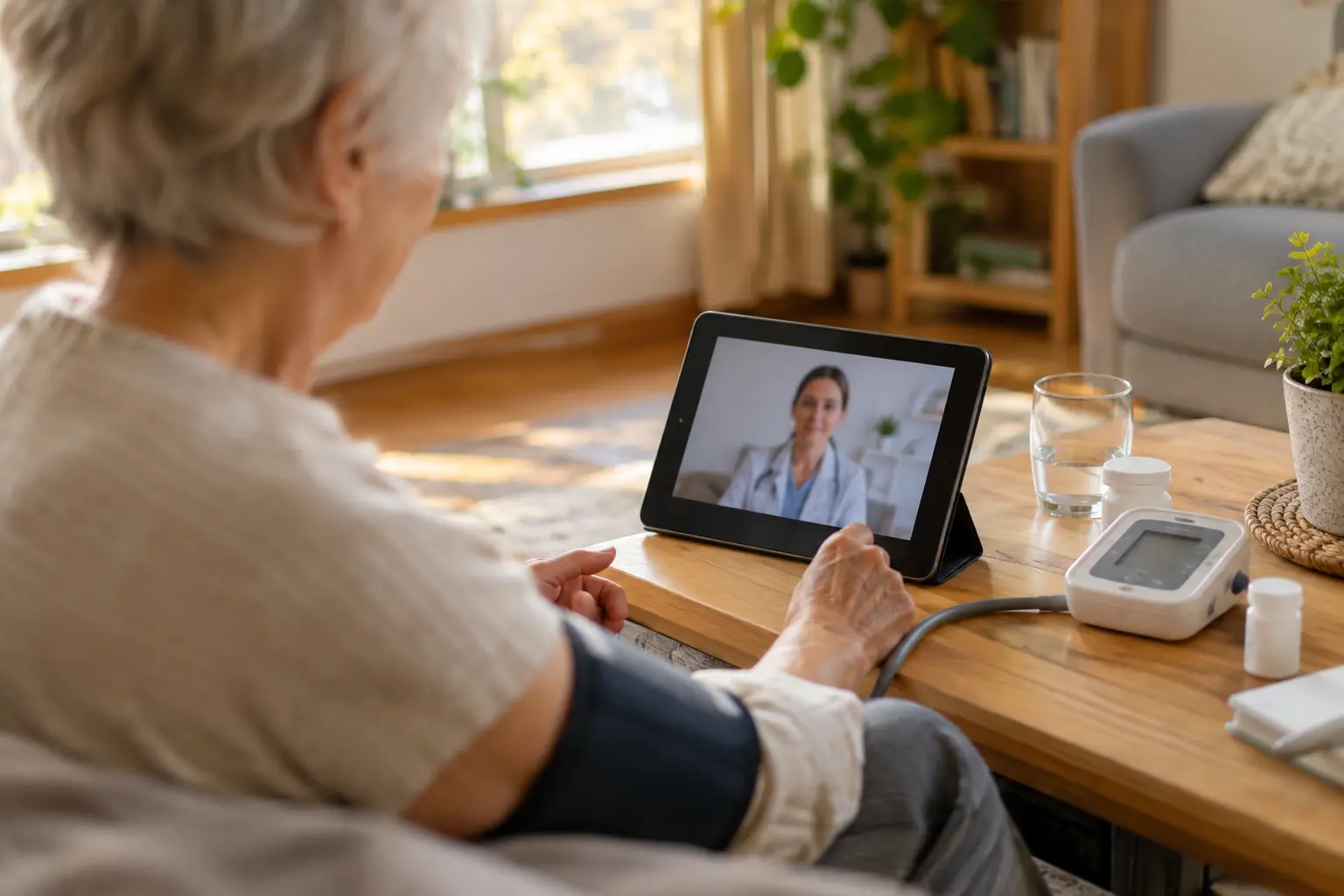
What makes telehealth a distinct thesis topic from general nursing informatics?
General nursing informatics theses typically study a single system’s usability or documentation burden within one clinical setting. A telehealth-adoption thesis usually adds two layers a supervisor should flag at the proposal stage: a technology-acceptance or implementation-science question (why do clinicians or patients adopt, sustain or abandon a remote-care modality), and a regulatory or jurisdictional question that a purely in-person informatics study does not face — licensure recognition across state or national borders, reimbursement eligibility for remote visits, and data-handling rules that may differ from an in-person encounter. A thesis that treats telehealth as simply “informatics delivered remotely” without engaging either layer usually turns out thinner than the student expected once they reach the discussion chapter.
What should the problem statement and objectives look like?
A workable problem statement names the specific telehealth service (synchronous video visits, remote patient monitoring, asynchronous store-and-forward triage), the specific population or unit (a named clinical service line, patient population or geographic setting rather than “telehealth in general”), and the specific gap — adoption barriers, workflow integration, an outcome not yet measured in that setting. Objectives should separate the implementation question (does adoption happen, and why) from any clinical-outcome question (does the telehealth pathway change a measured patient outcome), because these are two different research designs with different data sources, and a proposal that blends them without distinguishing which is primary tends to under-power both.
What ethical and regulatory considerations does a supervisor need to flag early?
Three considerations recur across telehealth-adoption theses and are worth raising at the first supervision meeting, before a design is finalised. First, data privacy: a remote-care platform may route patient data through infrastructure or a vendor different from the institution’s own clinical systems, which is a distinct data-protection question from an in-person chart review and should be raised with the institution’s data-protection or privacy office, not assumed to be covered by a standard clinical-research ethics approval alone. Second, cross-jurisdiction practice: a telehealth encounter can cross a licensure or regulatory boundary in a way an in-person encounter cannot, and a thesis studying an actual clinical telehealth service should confirm with the relevant regulatory body, not assume, whether the specific service being studied operates under a recognised licensure arrangement such as an interstate compact where the jurisdiction has one. Third, equity of access: a telehealth-adoption study should account for the population that cannot access the service at all — broadband, device or digital-literacy barriers — as a limitation or a variable, not an unstated blind spot, since excluding non-adopters entirely from the sample can bias an adoption study toward the population already most likely to adopt.
What variables and outcomes do telehealth-adoption theses typically measure?
Adoption-focused designs typically measure some combination of clinician or patient acceptance (frequently via a technology-acceptance framework adapted to healthcare), actual usage or continuation rates over a defined period, workflow-integration measures (time to complete a remote visit relative to an in-person one, documentation burden), and, where the thesis extends to outcomes, a specific clinical or process measure tied to the population being studied rather than a generic patient-satisfaction score alone. A committee reviewing a telehealth proposal should ask the student to name which of these categories the thesis is actually measuring, since “evaluating telehealth adoption” without a named variable category is a description of a field, not a research design.
What methodological designs are common for this topic?
Mixed-methods designs are common and often well-suited here: a quantitative adoption or usage-rate analysis paired with qualitative interviews explaining why clinicians or patients did or did not sustain use, since adoption rates alone rarely explain the reasons behind them. A purely quantitative design works where the thesis has access to a sufficiently large existing usage dataset; a purely qualitative design works where the thesis is exploratory, studying a newly implemented service with too little usage history yet for meaningful quantitative analysis. A supervisor should confirm which design fits the actual data access the student has, rather than the design the student finds most appealing in the abstract, since telehealth usage data specifically often sits with a vendor or a different department than the one supervising the thesis, and access needs to be confirmed early, the same feasibility discipline this site’s piece on problem-statement quality review applies in a different field. A supervisor who confirms data access before the design is finalised avoids the specific failure mode where a student builds a full quantitative proposal around a vendor dataset that turns out to require a data-sharing agreement the institution has not yet negotiated, discovered only once the proposal has already been approved and the ethics clock has started running.
How should an AI-related telehealth angle be handled given the university’s AI policy?
A growing share of telehealth-adoption proposals now include an AI-triage or AI-assisted-monitoring component, and this should be treated as a technology-adoption sub-question within the same framing, not a separate thesis category. The university’s existing AI-use policy for research and for student drafting is a different document from any AI-in-clinical-care governance the institution may have, and a supervisor should confirm which applies to which part of the thesis: the drafting-process AI policy governs how the student may use AI tools to write the thesis itself, while a separate clinical AI-governance framework, where the institution has one, governs the telehealth service’s own use of AI as the object of study. Conflating the two in a proposal is a common early confusion worth resolving explicitly at the first supervision meeting.

What should a supervision checklist for this topic look like?
A short, front-loaded checklist run once at proposal stage covers most of what causes delay later: has the student confirmed access to the specific telehealth service’s usage data or a route to recruit its clinicians and patients; has the data-protection question been raised with the relevant office rather than assumed to be covered by standard clinical ethics approval; has the student confirmed the regulatory or licensure status of the specific service being studied, if the design touches practice across a jurisdictional boundary; and has the student named which adoption-outcome variable category the thesis is actually measuring. A supervisor who runs this checklist once, at the first meeting, converts several potential mid-thesis delays into a single early conversation. Keeping a simple written record of the checklist outcomes per student — not a lengthy form, just the four questions and each answer — gives the faculty a body of evidence over several cohorts about which of the four items most often surfaces a problem, useful for the same programme-level pattern-spotting this site has documented for other early-stage review checkpoints.
How should a supervisor handle a topic that is moving faster than the literature?
Telehealth adoption is a genuinely fast-moving area — regulatory waivers, reimbursement rules and vendor platforms have changed materially in recent years in ways a literature review written even two years ago may not reflect. A supervisor should ask a student proposing this topic to explicitly date-check the regulatory and reimbursement landscape they are relying on against the current state, not the state described in an older secondary source, and to flag in the thesis itself which regulatory facts were confirmed as current at the time of writing versus cited from an older study. This is not a reason to avoid the topic — it is precisely why the topic converts well institutionally, since a thesis that gets this dating discipline right is demonstrably more rigorous than one that treats a three-year-old regulatory summary as still current.
What makes this topic distinct from a generic digital-health thesis?
Digital health is a broader category that includes wearables, patient-facing apps and clinical decision-support tools that never involve a live or asynchronous remote clinical encounter. Telehealth specifically involves a clinician-patient interaction mediated by technology, which is what triggers the licensure, reimbursement and clinical-workflow questions this piece covers; a thesis on a patient-facing wellness app, by contrast, faces a different and generally lighter regulatory profile. A student and supervisor should confirm early which category the proposed study actually falls into, since the ethics and regulatory checklist above applies specifically to the clinician-mediated telehealth case and would be unnecessarily heavy, or in some respects insufficient in different ways, for a pure digital-health consumer-app study.
Where Tesify fits
None of the ethics clearance, regulatory confirmation or data-access decisions above are ones a writing platform makes — they stay with the ethics office, the relevant regulatory body and the telehealth service’s own data custodian. Tesify is a thesis-writing workspace already used by 9,000+ students across more than 15,000 chapters, and every chapter in it is 100% written by the candidate. That is the relevant point for the AI-policy question above: it keeps the drafting side of a telehealth thesis within the student’s own authorship, separate from any AI the telehealth service itself uses as the object of study.
Frequently asked questions
How is a telehealth-adoption thesis different from a general nursing informatics thesis?
It typically adds a technology-acceptance or implementation-science question and a regulatory or cross-jurisdiction question that a purely in-person informatics study does not face, such as licensure recognition and remote-care-specific data handling.
What should the problem statement name specifically?
The specific telehealth service (synchronous video, remote monitoring, asynchronous triage), the specific population or clinical unit, and the specific gap being addressed — not a general survey of telehealth in nursing.
What ethical considerations are specific to telehealth-adoption research?
Data privacy where a vendor platform routes patient data differently from the institution’s own systems, the regulatory or licensure status of the specific service if practice crosses a jurisdictional boundary, and equity of access for the population that cannot use the service at all.
What outcome categories should a telehealth-adoption thesis measure?
Some combination of clinician or patient acceptance, actual usage or continuation rates, workflow-integration measures such as visit duration or documentation burden, and, where relevant, a specific clinical or process outcome tied to the population studied.
Is a mixed-methods design necessary for this topic?
Not necessary, but common and often well-suited, since adoption or usage rates alone rarely explain the reasons behind them. The right design depends on what usage data and qualitative access the student can actually confirm, not on preference alone.
How should an AI-assisted telehealth component be framed relative to the university’s AI-use policy?
As a technology-adoption sub-question within the same thesis framing. The drafting-process AI policy (how the student may use AI to write the thesis) is a separate document from any clinical AI-governance framework (how the telehealth service itself uses AI), and a supervisor should confirm which applies to which part of the proposal.
What should a supervisor confirm at the first meeting on this topic?
Data access to the specific telehealth service, whether the data-protection question has been raised with the relevant office, the regulatory or licensure status of the service if it crosses a jurisdictional boundary, and which adoption-outcome variable category the thesis is actually measuring.
Does this framing apply to remote patient monitoring as well as video visits?
Yes. The same specificity, regulatory and outcome-category questions apply regardless of which telehealth modality the thesis studies; the specific service and population named in the problem statement should simply match whichever modality is actually being examined.