| Category | Examples | What it actually does | Typical licensing model |
|---|---|---|---|
| Pharmaceutical literature & drug information | PubMed/MEDLINE, Embase, International Pharmaceutical Abstracts (IPA), Cochrane Library | Indexes pharmacy- and pharmacology-specific literature with controlled vocabulary (MeSH, Emtree) that a general database does not use | PubMed free; Embase and IPA institutional subscription, typically per-seat or site-wide |
| Chemical structure & compound data | ChemDraw, PubChem, DrugBank | Draws publication-standard chemical structures; looks up compound, target and interaction data | ChemDraw per-seat or lab licence; PubChem and DrugBank public/free with tiered commercial access for bulk use |
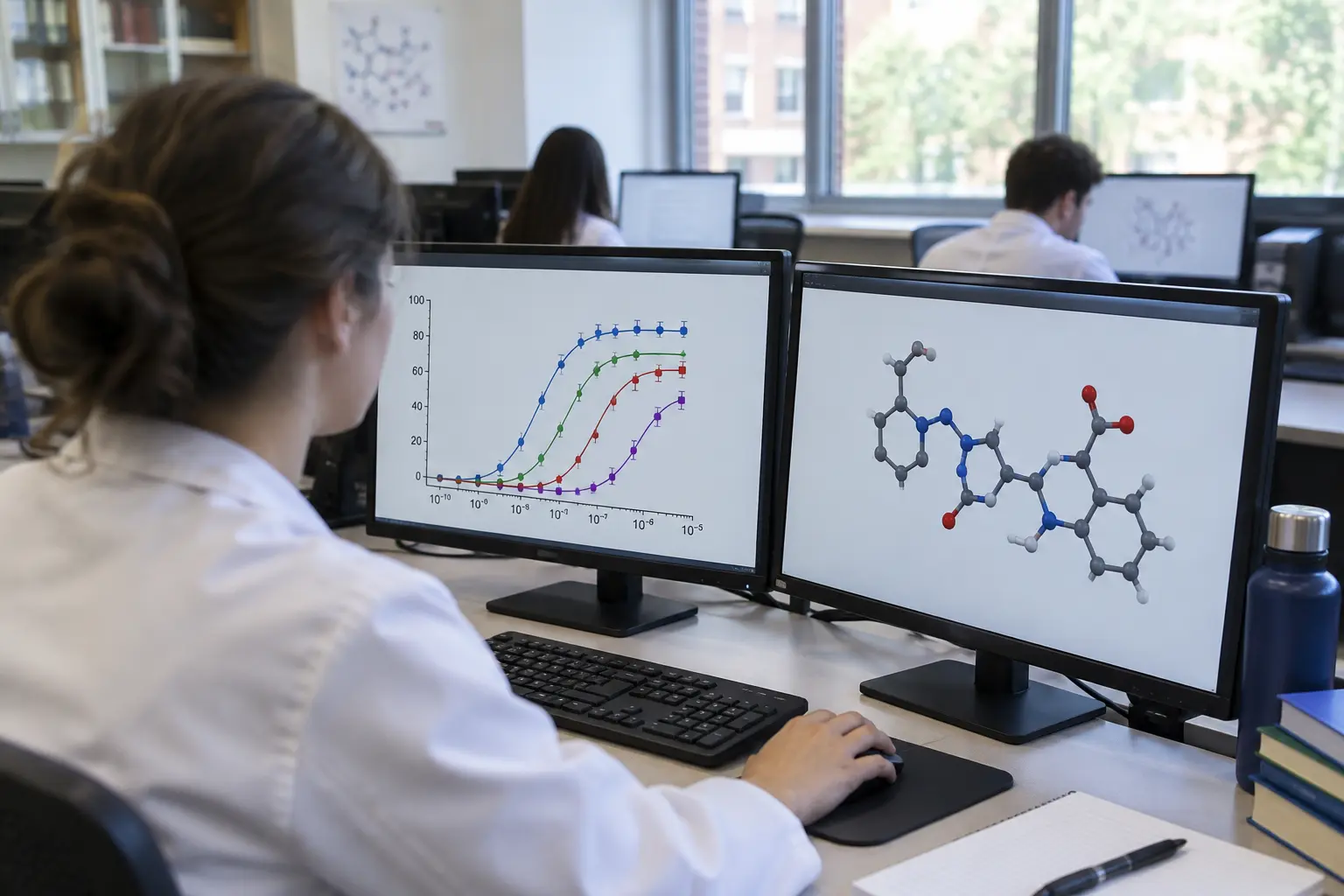
| Statistical analysis | GraphPad Prism, SPSS, R | Pharmacokinetic modelling, dose-response curves, clinical-outcomes statistics, general inferential statistics | GraphPad and SPSS per-seat commercial licence; R free and open-source |
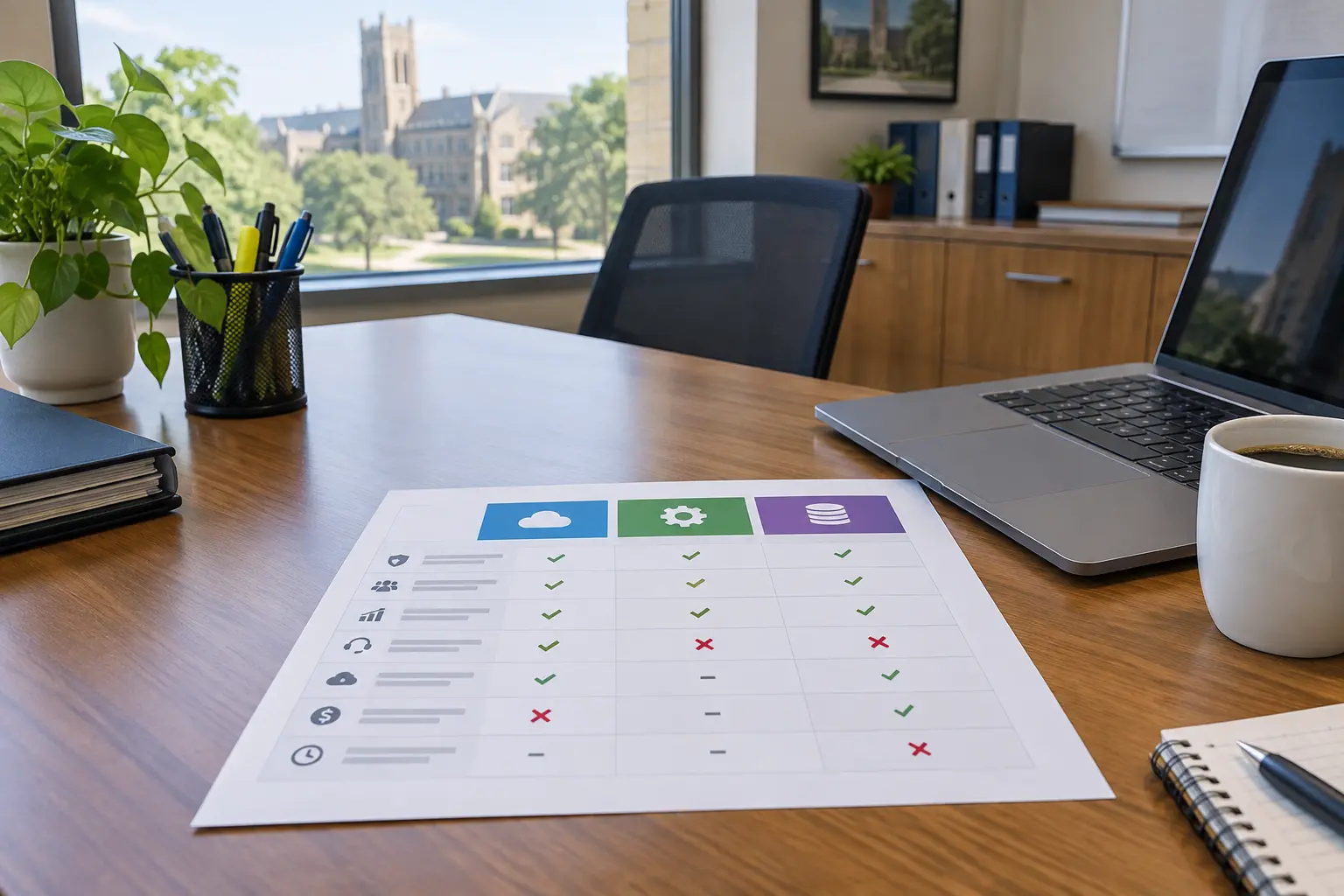
A pharmacy thesis cohort is not shopping for one tool — it needs three distinct, genuinely different categories, and a procurement process that treats this as a single “pharmacy thesis software” decision routinely ends up under-provisioning at least one of them. The comparison below scores each category on the criteria that actually distinguish it, not a generic feature checklist borrowed from a different discipline’s tool comparison.
Category one: pharmaceutical literature and drug information
PubMed/MEDLINE is the free, universally available starting point, and no pharmacy thesis literature search should skip it. Embase adds broader international and pharmaceutical-industry coverage with its own controlled vocabulary (Emtree), which matters specifically for drug-safety and pharmacovigilance literature that PubMed’s MeSH indexing covers less completely. International Pharmaceutical Abstracts (IPA) is narrower and more pharmacy-practice-specific — useful where a thesis concerns pharmacy practice, pharmacy education or pharmaceutical care rather than pure pharmacology or medicinal chemistry. The Cochrane Library is the standard source for systematic-review-level evidence on drug efficacy and safety, relevant to any pharmacy thesis built around a systematic review or meta-analysis component. A faculty’s subscription decision here should be driven by which of these the cohort’s actual thesis topics need — a cohort weighted toward pharmacy-practice and pharmaceutical-care topics gets more value from IPA than one weighted toward medicinal chemistry, which draws more on PubMed and Embase.
Category two: chemical structure and compound data
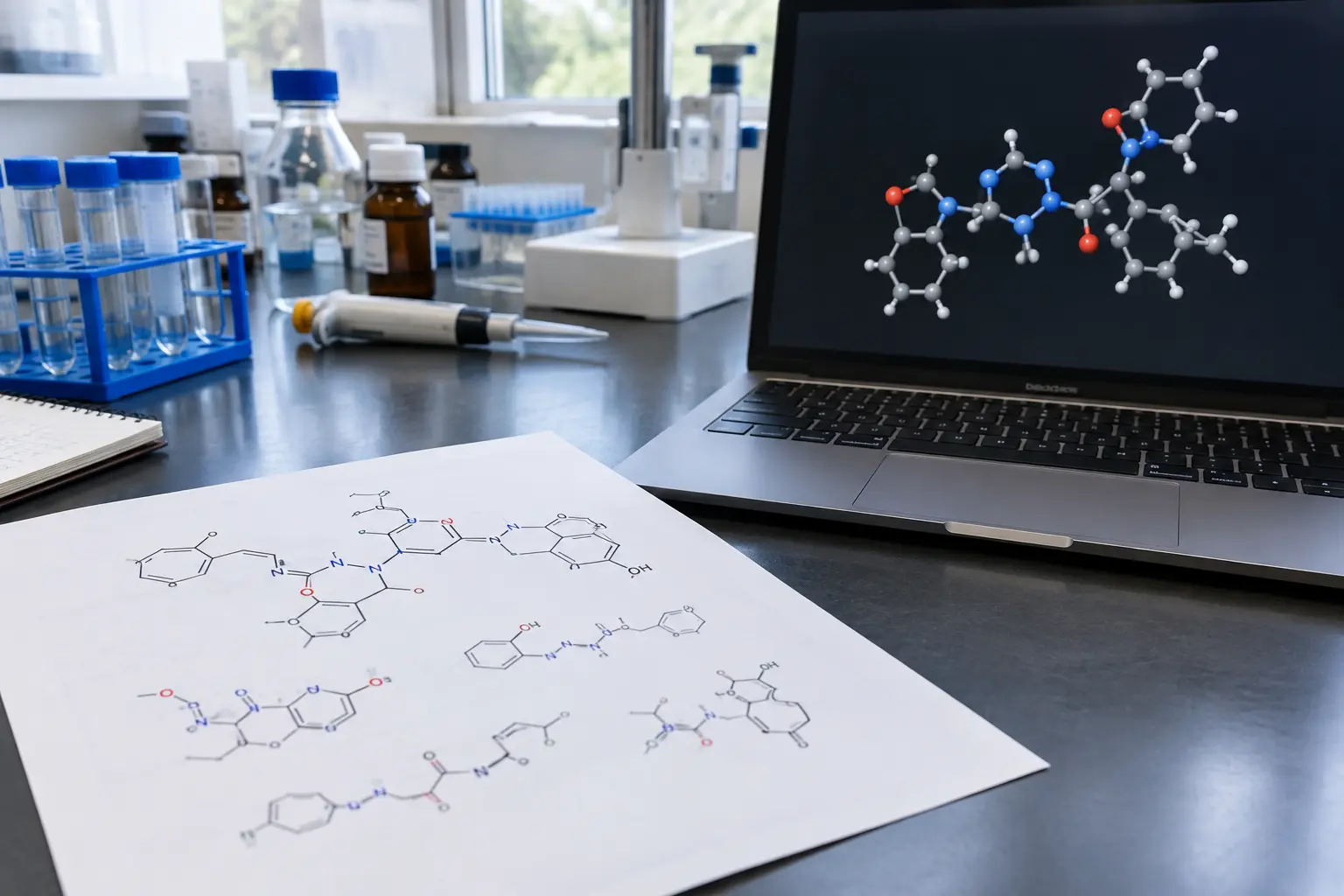
ChemDraw is the standard for drawing chemical structures, reaction schemes and structure-activity relationship diagrams to a standard publishable in a pharmacy thesis or a peer-reviewed pharmaceutical journal — word-processing software’s drawing tools are not an adequate substitute for any thesis with a medicinal chemistry or drug-design component. PubChem and DrugBank are free, publicly accessible compound and drug databases: PubChem for bioactivity and chemical-property data across a very wide compound set, DrugBank specifically for approved and investigational drug data including targets, interactions and pharmacology, with a tiered structure that keeps academic look-up access free while charging for bulk or commercial data access. A pharmacy thesis student doing any drug-design, pharmacology or pharmacokinetics work will likely touch both PubChem and DrugBank directly, at no direct cost to the faculty, while ChemDraw specifically is the licensing decision that needs faculty-level procurement attention.
Category three: statistical analysis
GraphPad Prism is widely used in pharmacology and life-science labs specifically for dose-response curve fitting, non-linear regression and the kind of pharmacokinetic modelling a lab-based pharmacy thesis frequently needs, with a more approachable interface for this specific class of analysis than general-purpose statistics packages. SPSS remains the more familiar choice for pharmacy-practice or clinical-outcomes-focused theses doing more conventional inferential statistics — regression, ANOVA, survey-data analysis — where GraphPad’s pharmacology-specific strengths are less relevant. R is free and increasingly capable for both use cases, at the cost of a steeper learning curve than either commercial package for a student without prior programming exposure. Most faculties supporting a pharmacy cohort with genuinely mixed project types — some lab-bench pharmacology, some clinical or practice-based — find that standardising on a single statistical package under-serves one half of the cohort, and support two rather than force a one-size-fits-all choice.
Training cost and onboarding, by category
The three categories also differ sharply in how much staff time they cost to onboard a new cohort each year, which is worth weighing alongside the licence fee itself. Literature databases are the lowest-friction of the three: most students arrive with some PubMed familiarity from earlier coursework, and a single library-run orientation session covering Embase’s and IPA’s controlled-vocabulary search syntax is usually sufficient. ChemDraw sits in the middle — intuitive for basic structure drawing, but a cohort producing publication-quality reaction schemes benefits from a dedicated session on its more advanced features, typically run once by a lab manager or senior student rather than procured as formal vendor training. Statistical software carries the highest training cost of the three, and the gap between packages matters here specifically: GraphPad Prism and SPSS both have a gentler learning curve for a student with no programming background than R does, which is the practical reason many faculties keep a commercial package as the default even where R’s zero licence cost is otherwise attractive, reserving R for students who already have or want to build programming competence alongside their thesis work.
How this differs from the site’s other tool-comparison pieces
This site has already compared reference managers for faculty-wide standardisation and statistical and analysis software for an Accounting & Finance faculty. Both are genuinely different decisions from the ones covered here: the reference-manager piece is about citation and bibliography tooling common across every discipline, not the pharmacy-specific literature databases (Embase, IPA) this piece covers, which index pharmaceutical content a general reference manager does not search; and the Accounting & Finance statistics piece compares a different tool set (Stata, Python, WRDS, Bloomberg) suited to financial and economic data, not the pharmacology-specific curve-fitting GraphPad Prism specialises in. A pharmacy faculty procuring software should treat all three pieces as covering non-overlapping ground, not redundant coverage of the same underlying decision.
Data residency and licensing considerations
As with any procurement decision touching student and research data, the same due-diligence questions this site’s piece on where student text is actually processed raises for edtech generally apply here too, particularly for any tool that stores research data in a cloud account rather than locally: where is the data hosted, does the vendor’s data processing agreement cover the categories of data a pharmacy thesis might involve (which can include de-identified patient-adjacent data in a pharmacy-practice thesis), and what happens to that data if the student’s licence or account lapses after graduation. A faculty running a lab-based pharmacy programme with sponsored or industry-linked research should also confirm, before procurement, whether a given tool’s standard terms permit that kind of externally sponsored data to be stored in the vendor’s account at all, since some academic-tier licences explicitly exclude commercially sponsored research from their standard terms. This is a procurement and data-protection office question for each tool individually, not something a feature comparison alone resolves.
What a first-time procurement conversation usually gets wrong
Faculties running this decision for the first time as one combined “pharmacy thesis software” procurement conversation, rather than three separate ones, tend to make the same mistake in one of two directions: either over-indexing on the literature-database subscription because it is the most visible, library-owned line item, while leaving ChemDraw and statistics software to individual labs to sort out ad hoc with no faculty-level licensing efficiency; or the reverse, treating statistics software as the only “real” procurement decision because it has the clearest per-seat commercial cost, while assuming the free tiers of PubChem, DrugBank and PubMed cover the literature side adequately without checking whether the cohort’s actual topic mix needs Embase or IPA specifically. Neither assumption holds up once the three categories are examined separately against the cohort’s real project mix, which is the reason for treating this as three procurement decisions from the outset rather than one.
Recommendation
For most pharmacy faculties evaluating this stack from a standing start: PubMed as the free baseline plus an Embase subscription for pharmacovigilance-relevant international coverage, ChemDraw for any cohort with a medicinal-chemistry or drug-design component (with PubChem and DrugBank used freely alongside it), and GraphPad Prism as the primary statistics package for lab-based pharmacology work with SPSS or R available as a secondary option for practice- and clinical-outcomes-focused students. IPA is worth adding specifically where the cohort skews toward pharmacy-practice topics rather than pharmacology or medicinal chemistry — it is a narrower, more specialised subscription than Embase and should be evaluated against the cohort’s actual topic mix rather than added by default.
Where Tesify fits
None of the three category decisions above are ones a writing platform makes or replaces — they stay with the faculty’s library, IT procurement and research-methods staff. Where Tesify for Institutions fits is downstream, once a student is drafting: giving supervisors visibility into a thesis’s progress regardless of which literature database, chemical-structure tool or statistics package the student used to generate the underlying data and citations. The Tesify Integrity Suite for Institutions runs similarity screening across a pharmacy cohort’s submissions alongside whichever literature tools the faculty has procured. A free departmental pilot lets one pharmacy cohort test both before any procurement decision on either category above.
Frequently asked questions
What software categories does a pharmacy thesis cohort actually need?
Three distinct categories: pharmaceutical literature and drug-information databases, chemical-structure and compound-data tools, and general statistical analysis software — each solving a different job, and rarely all provided by a single vendor.
Is a general reference manager like Zotero or EndNote enough for a pharmacy thesis?
For citation management, yes, and this site’s general reference-manager comparison covers that decision. It is not a substitute for a pharmaceutical-specific literature database, since a general reference manager does not index the pharmacy-specific controlled vocabulary and drug-information content those databases provide.
Why does a pharmacy faculty need chemical-structure software specifically?
Any thesis involving medicinal chemistry, drug design or structure-activity discussion needs to draw and present chemical structures to a publication standard, which word-processing software cannot do — a dedicated chemical-drawing tool is a distinct procurement decision from either the literature or statistics tools.
Should the faculty standardise on one statistical package across the whole cohort?
Standardising eases supervisor support and training cost, but a pharmacy cohort’s projects vary widely — pharmacokinetic modelling, clinical outcomes analysis, laboratory bench data — and a single package rarely fits all of them well, so most faculties support two rather than one.
What is the biggest procurement mistake for this tool stack?
Treating it as one undifferentiated “pharmacy thesis software” purchase rather than three separate category decisions — a literature database vendor rarely does compound-structure tools well, and a statistics package does neither.
Are PubChem and DrugBank free to use for a student thesis?
Academic look-up access to both is free; each applies a tiered structure that charges for bulk or commercial-scale data access, which is rarely relevant to an individual thesis’s data needs but worth checking before any large-scale automated data pull.
Which category costs the most staff time to onboard each new cohort?
Statistical software, because the gap in learning curve between a commercial package like GraphPad Prism or SPSS and free, code-based R is larger than the equivalent gap in either the literature-database or chemical-structure categories.