
The related-studies chapter is where a social work thesis shows that the student knows what has already been done, and it is where supervisors lose the most time. Drafts arrive as long strings of “Smith (2019) found… Jones (2020) found…”, with no organising logic, no sense of which studies matter most and no link to the thesis’s own question. This guide gives a supervisor or programme director a workflow for the chapter: how to structure it, how many studies to expect, how old they can be, the summary formula a student can apply to every entry, and three model entries built from real, checkable studies on field education in social work. It also sets out the review checklist a second reader can use before the chapter goes to the examiners.
What the chapter is for, and what it is not
Different institutions use different names: related studies, related literature, antecedents, literature review. The job is the same. The chapter establishes the evidence base around the thesis question and exposes the gap the thesis fills. It is not a bibliography with commentary, and it is not the theoretical framework, which explains the concepts and theories the thesis uses. A useful rule for supervisors is that related studies answer the question “what do we already know about this exact problem, in these settings?”, while the framework answers “through which concepts will this thesis interpret it?”
In social work the distinction matters because the field draws on practice evidence, policy documents and cross-disciplinary studies at once. A chapter that merges them all into one list makes the student’s argument impossible to follow.
A three-stream structure that works
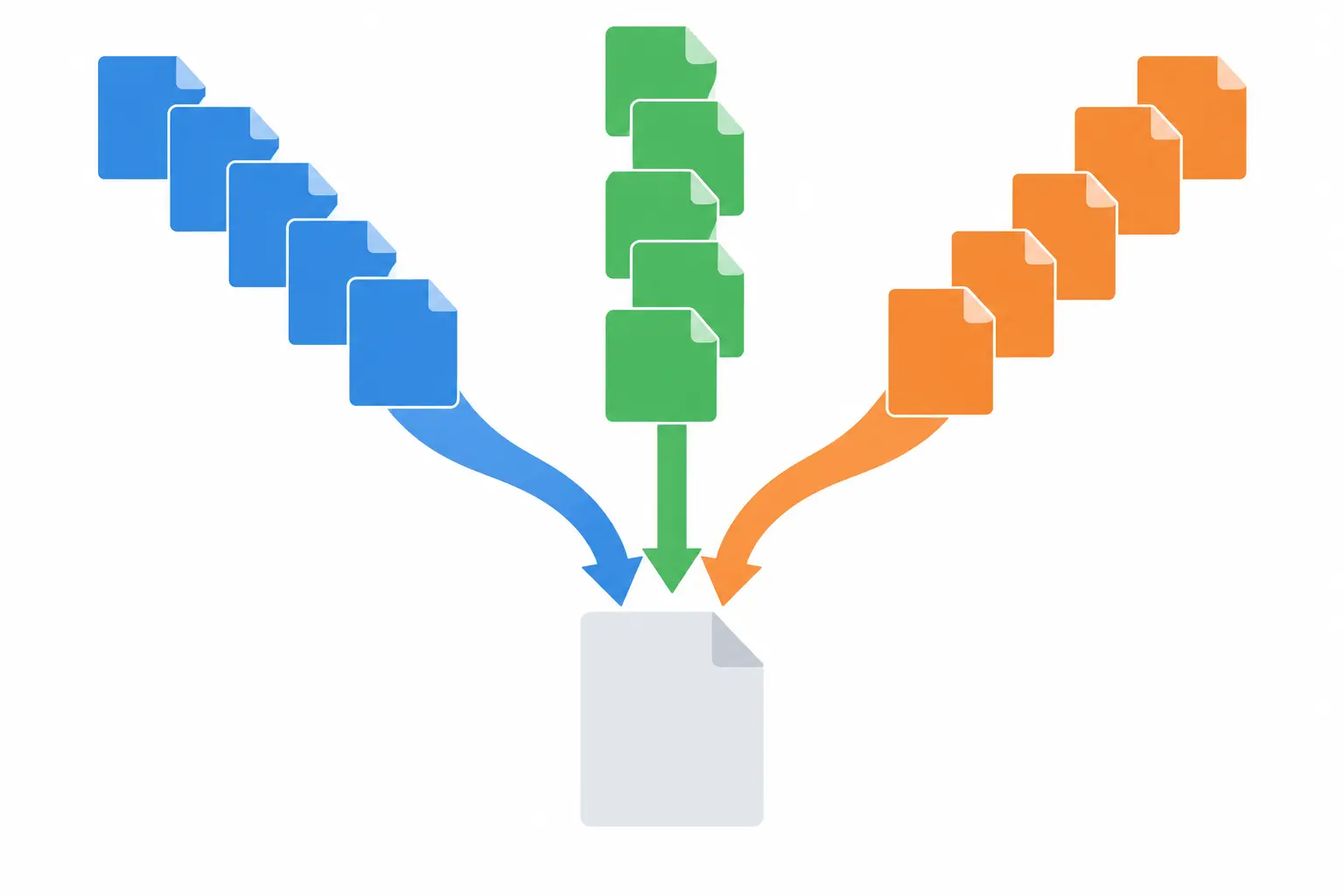
A structure that supervisors can ask for in every proposal is to sort the related studies into three streams and to write one section for each.
- Studies from other countries or systems. They show what is known elsewhere and whether findings travel.
- Conceptual and professional discussion. Articles that reason about the problem without new data, such as the ethical or practice analyses that shape what the thesis asks.
- Studies from the local or institutional setting. Reports, programme evaluations and case studies from the region, school of social work or agency where the thesis is set.
The labels vary (some institutions say foreign and local), but the logic holds. Within each stream the student should group studies by theme, not by author, and should end each section with a short paragraph saying what the group shows and what it leaves open. The chapter ends with a synthesis that states the gap in one or two sentences.
How many studies, and how old?
There is no universal count, and a supervisor should resist a numeric target that rewards padding. A more defensible rule is coverage: every key variable and relationship in the research question should be supported by at least one study the student has read in full, and the strongest three or four studies should be examined in detail. As for age, recent work should dominate where practice has changed, but older studies belong in the chapter when they are the origin of a concept, an instrument or a method. The student should explain why an older study is included.
The faculty can set a stricter local rule in its thesis handbook. If it does, the rule should say whether it counts peer-reviewed articles only or also includes reports and theses, because social work evidence often sits in both.
The summary formula for each entry
A reliable way to stop the “Smith found” pattern is to give students a fixed formula for every study they discuss in detail. One version has six parts:
- Who and when: authors, year, journal.
- Design and sample: what kind of study, how many participants, from where.
- Main finding: in the authors’ own terms, not stretched.
- Limit: what the design cannot show.
- Link to the thesis: why the study matters to this question.
- Gap: what it leaves unanswered that the thesis addresses.
The formula makes the student read for limitations and relevance. It also makes the supervisor’s feedback quick, because the missing part is obvious.
Three model entries built from real studies
The thesis question for this illustration is hypothetical: how did disruption to practicum placements affect social work students’ experience of field education? The three studies below are real, and the summaries follow what their abstracts state. The thesis, the gap statements and the framing are illustrative.
| Stream | Study | Design and sample | Finding as stated by the authors | Link and gap |
|---|---|---|---|---|
| Other systems | Au, Drolet, Kaushik, Charles and colleagues (2023), Journal of Social Work 23, 522–547 | Cross-sectional survey of 367 Canadian social work students | Reduced practicum hours, and placements ending early or moving online; concerns about experience gaps, financial difficulties and mental health; the authors call for flexibility and accommodations | Shows the student-side picture in one country; says little about how placements were reorganised inside a school |
| Conceptual | Bernhardt, Forgetta and Sualp (2021), Journal of Human Rights and Social Work 6, 91–96 | Discussion article based on research on moral distress | Moral distress has been studied mainly in nursing and clinical disciplines but is noted in social work; students may face it in placements; students’ own perspectives are understudied | Supplies a concept for what students may experience; offers no data from students themselves |
| Institutional case | Dempsey, Lanzieri, Luce and colleagues (2022), Clinical Social Work Journal 50, 11–21 | Reflective account of one large school of social work | The pandemic strained a placement process that was already challenging, exposing interdependent systems schools must address; lessons drawn for the future | Documents one school’s response; a single case, so it cannot be generalised |
How the paragraph reads when the student writes it
A student working from the formula might write: “In a cross-sectional survey of 367 Canadian social work students, Au et al. (2023) report reduced practicum hours and placements that ended early or moved online, alongside concerns about gaps in experience, financial difficulties and mental health. Because the survey records students’ perceptions at one point in time, it cannot show how schools reorganised placements; the present study addresses this by…” The final clause is where the student connects the study to the thesis. Without it, the sentence is a summary and not an argument.
Where to search, and how to keep the record
Students should search more than one database and record the searches, the date and the terms. The way a library can scale database-search support for a cohort is described in the guide to library search support for communication and journalism theses, and the same workshop model suits a social work cohort. A reference manager keeps the record tidy; the faculty can compare options in the piece on reference manager comparison for faculties. Whichever tool is chosen, the student should be able to show the supervisor a list of searches, not just a list of sources.

A review checklist for the supervisor or second reader
- Is the chapter organised by theme within streams, not by author?
- Does every detailed entry state design, sample, finding, limit, link and gap?
- Are findings reported in the authors’ terms, without stretching a survey into a causal claim?
- Is each study the student read in full distinguished from one cited second-hand?
- Does the chapter end in a synthesis that states the gap in one or two sentences?
- Does the gap match the research question and the method chosen in the next chapter?
- Are older studies justified, and are local sources included where they exist?
Common faults and the fix for each
- A list of summaries. Require a theme sentence at the start of each paragraph and a synthesis at the end of each section.
- Studies from the wrong population. A study of social work practitioners does not describe students. Ask the student to state how the population differs.
- Quoting abstracts only. Ask for the evidence table, with page references for every figure the student reports.
- No local evidence. If the thesis is set in one agency or region, ask which local reports or evaluations exist and why they are absent.
- Gap asserted, not shown. A sentence beginning “no studies have…” needs a record of the searches that support it.
How the chapter connects to assessment of placement-based work is covered in the faculty rubric guide for internship and practicum-based social work theses, which separates placement performance from academic rigour.
Ten sample topics for a related-studies exercise
- Students’ experience of remote or modified practicum in one school of social work.
- Moral distress among social work students in health placements.
- Supervision quality during field placements and student confidence.
- Financial pressure and unpaid placements among social work students.
- Field-education coordinators’ strategies for managing placement shortages.
- Student wellbeing and support services during practicum.
- Agency supervisors’ views of student readiness for practice.
- Differences in practicum experience between part-time and full-time students.
- The role of reflective supervision in learning from placement.
- Continuity of learning when placements end early.
From the gap to the method
The last test of the chapter is whether the gap it states leads naturally to the design in the next one. If the synthesis says that existing evidence comes from one-off surveys, the thesis might justify interviews or a repeated survey. If it says that most evidence is conceptual, the thesis might collect first data from students themselves. When the chosen design relies on a questionnaire, the supervisor should also check that the student has a plan to evidence its quality, using a checklist such as the one in the guide to teaching students to validate a thesis instrument. A chapter that identifies a gap but is followed by a method that does not address it is the single most common reason examiners ask a student to rewrite both.
Where Tesify fits
Judging the strength of a student’s evidence base is a supervisor’s task, and so is deciding what the gap is. Once the structure is agreed, Tesify helps students structure and organise their thesis while they write 100% of the work themselves: more than 9,000 students have written over 15,000 chapters with Tesify. See how Tesify supports a thesis cohort.
Frequently asked questions
What is the related-studies chapter in a social work thesis?
It is the chapter that reviews existing evidence on the thesis question and shows the gap the thesis fills. It is separate from the theoretical framework, which explains the concepts used to interpret findings.
How should a student organise related studies?
By theme within three streams: studies from other countries or systems, conceptual and professional discussion, and studies from the local or institutional setting, ending with a synthesis that states the gap.
How many studies should the chapter include?
There is no universal number. The test is coverage: each key variable and relationship should be supported by studies read in full, and the strongest three or four should be examined in detail.
How old can the studies be?
Recent work should dominate where practice has changed. Older studies are appropriate when they are the source of a concept, instrument or method, and the student should say why they are included.
What is the summary formula for an entry?
Authors, year and journal; design and sample; main finding in the authors’ terms; limit; link to the thesis; and the gap the study leaves.
Can a student rely on abstracts?
Abstracts are a starting point. A figure or claim reported in the chapter should be checked in the full text, and the evidence table should record the page where it appears.
What do the model entries in this guide show?
They show how a survey of 367 Canadian social work students, a discussion article on moral distress and one school’s reflective account can sit in three streams, each summarised only as far as its abstract allows.
Where should students look for local studies?
In institutional repositories, agency or government evaluations, regional journals and previous theses from the same school, with the searches recorded.
How does the chapter link to the methods chapter?
The gap stated in the synthesis should lead directly to the research question and justify the design chosen, so the examiner can follow one line of argument.
Who should review the chapter before submission?
The supervisor, ideally with a second reader who uses the checklist and checks that the evidence table matches the text.