
| Resource | What it covers | Access model | Best for |
|---|---|---|---|
| RILM Abstracts of Music Literature | Scholarly music literature across all languages and traditions, 1.82 million+ records from the early 19th century to present; a companion Index to Scores and Collected Editions covers over 597,000 records | Subscription, typically licensed by the institution through the library | Literature-review searches across scholarly writing about music, any genre or period |
| IMSLP (Petrucci Music Library) | Public-domain and permission-cleared scores, recordings and composer/performer metadata; hundreds of thousands of scores and tens of thousands of recordings | Usable without registering; an optional paid subscription is also offered | Primary-source scores and historical recordings to analyse directly |
A music thesis cohort needs both categories of resource, not one standing in for the other: RILM for the scholarly literature review, IMSLP for primary-source scores and out-of-copyright recordings a student needs to analyse directly. Confusing the two — sending a student to IMSLP looking for secondary scholarship, or to RILM looking for a public-domain score to analyse — wastes review time a resource guide can prevent with one paragraph. The comparison below is built for a procurement-grade evaluation: what each resource actually is, who pays for access and how, and which specific thesis task each one is built to support, rather than a general survey of music research tools.
What RILM actually is
RILM (Répertoire International de Littérature Musicale) is an international organisation founded in 1966, headquartered at the CUNY Graduate Center and accredited by UNESCO, dedicated to documenting music scholarship across all languages and traditions. Its flagship RILM Abstracts of Music Literature database holds over 1.82 million records spanning publications from the early 19th century onward, and a companion Index to Scores and Collected Editions covers more than 597,000 additional records, with a full-text enhancement available for over 200 journals. Access to RILM is typically licensed by an institution through its library rather than purchased individually by a student, which makes confirming the institution’s own subscription status — not assuming it exists — the first step in any resource guide.
What IMSLP actually is
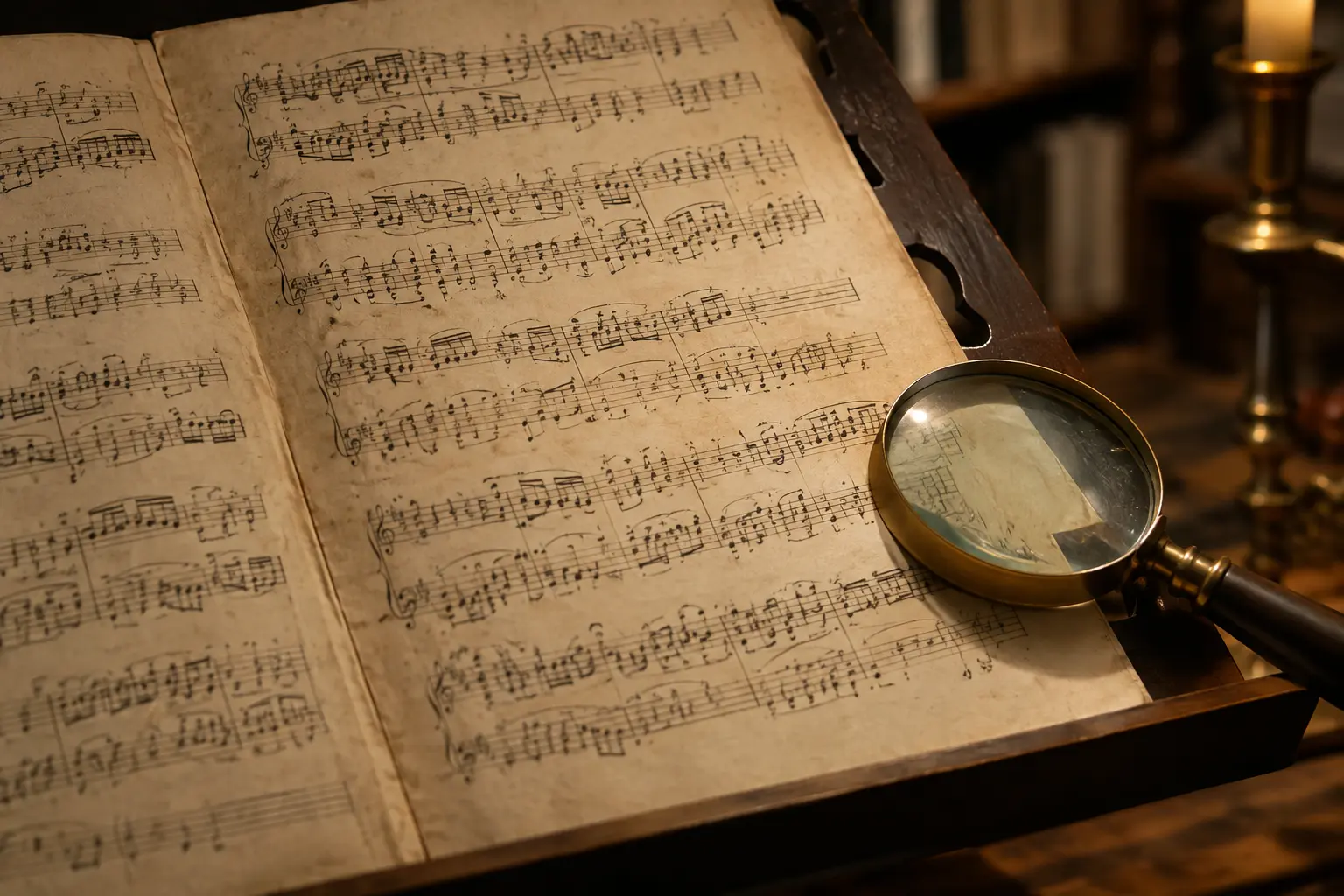
IMSLP, also known as the Petrucci Music Library after Ottaviano Petrucci, whose 1501 Harmonice Musices Odhecaton was the first printed book of music, is a digital score and recording library launched in 2006 and owned by Project Petrucci LLC. It holds public-domain works alongside works by contemporary composers who release them under licences such as Creative Commons, spanning hundreds of thousands of scores and tens of thousands of recordings across tens of thousands of composers. Unlike RILM, IMSLP can be used without registering or subscribing, although it also offers an optional paid subscription. Its copyright model means a student needs to check the specific licence status of any individual score or recording before using it in a way that assumes public-domain status — IMSLP hosts a mix of public-domain and licensed material, not one uniform licence across the whole library.
Why a music faculty needs both, not one
A thesis analysing a specific score, or comparing editions, needs primary-source access — IMSLP’s core purpose. A thesis situating that analysis in the existing scholarly conversation about the composer, genre or period needs the literature-review layer RILM provides, since IMSLP is not an index of scholarly writing about music and does not attempt to be one. A resource guide that only names one of the two leaves a student either without primary sources to analyse or without the scholarly grounding a thesis committee will expect the literature review to demonstrate.
The procurement-grade criteria that actually matter here
For RILM: does the institution’s current library subscription actually include the full-text-enhanced journal set, or only the abstract-level index, since the two tiers differ meaningfully in what a student can access directly versus what still requires a separate document-delivery request. For IMSLP: no procurement decision is needed for basic access, but the library or methods office should still publish a one-line guidance note on checking a given score’s specific copyright status before a student assumes it is public domain, since the assumption is wrong often enough on relatively recent editions to be worth stating explicitly.
A gap worth naming: neither resource is a full-text score-image repository for copyrighted editions
A common early mistake is assuming IMSLP will hold a scan of a recent, still-copyrighted critical edition simply because the composer died long ago — the composer’s death date determines the underlying work’s copyright status in many jurisdictions, but a specific modern edition, with its own editorial additions, can carry a separate and later copyright term independent of the original work. A student who needs a specific critical edition rather than any public-domain edition of a work should expect to request it through the library’s own collection or interlibrary loan, not assume IMSLP holds it simply because an older edition of the same piece does appear there.
What the faculty should check before assuming RILM coverage is current
A subscription that was adequate five years ago can lag behind a fast-moving sub-field if the institution has not reviewed its RILM tier recently, particularly for full-text access to newer journals. A resource guide should note the date it was last checked against the library’s current subscription terms, and the methods office should re-verify that note at least once a year rather than treating a guide written once as permanently accurate — subscription terms and journal coverage both change, and a guide that goes uncorrected for several years risks sending a cohort to a tier the institution no longer holds. The same sourcing discipline this site’s piece on where doctoral-thesis production counts actually come from applies to any institutional data claim — state the source and the date it was checked explicitly, rather than letting a once-accurate figure quietly go stale — applies just as directly to a subscription-coverage note.
What a resource guide should tell a student about each one
Two paragraphs, not two pages: which one to search for scholarly literature about a topic (RILM, checking the institution’s specific subscription tier first) and which one to search for a score or historical recording to analyse directly (IMSLP, checking the specific item’s copyright status before treating it as reusable without restriction). A student who understands this division searches each resource for the job it is actually built for, rather than treating either as a general-purpose music database.
How this compares to a literature-sources guide in another field
The underlying structure here — a scholarly-literature index paired with a primary-source repository, evaluated separately rather than as competing options — is the same shape this site’s piece on core journals and databases for an occupational therapy thesis cohort uses for a different discipline: a field’s own peer-reviewed record and a purpose-built evidence index serve different jobs in a literature review, and naming both explicitly, with the job each one does, is what makes a resource guide useful rather than a bare list of links.
Where this fits against the faculty’s other tool decisions
A resource-access guide is a distinct decision from a reference-manager standardisation choice: the reference manager governs how a student formats and organises citations once sources are found, while RILM and IMSLP govern where the sources themselves come from in the first place. A faculty running an orientation session for a new thesis cohort should cover both, in that order — finding sources, then managing citations — rather than treating them as one combined software-onboarding topic.
Building the same comparison for other repertoire traditions
RILM and IMSLP together cover Western art-music scholarship and public-domain score access reasonably well, but a thesis working in an ethnomusicological, non-Western or popular-music tradition may need additional named sources the two-resource comparison here does not fully cover — RILM’s own stated coverage extends across languages and traditions, but a student working in a specialised repertoire should confirm with the library whether a discipline-specific archive or database exists for that tradition specifically, rather than assuming RILM and IMSLP alone are exhaustive. A resource guide covering a music faculty with a strong ethnomusicology or popular-music programme should name that additional source explicitly, once the library has confirmed access to it, rather than leaving the two-resource comparison here to stand in for a broader repertoire than it was built to cover.
How this affects the thesis timeline
A student who understands the RILM/IMSLP division from the start of the literature-review stage avoids a common mid-project delay: discovering partway through writing that the score they have been analysing from a general web search is a later, still-copyrighted edition rather than the public-domain edition IMSLP would have provided, and having to redo the analysis against a different source text. Naming both resources, and the specific job each does, at the cohort’s literature-review orientation session — before students start independently searching — is a small time investment that prevents a much larger one later in the timeline. Once the resource guide exists, the orientation session itself can be short, since the guide does the explaining and the session only needs to point students to it and confirm they have working access to both resources before the literature-review clock starts.

Where Tesify fits
Choosing and subscribing to a literature database, and judging which sources a given thesis actually needs, stay with the library and the student’s own supervisor. Once a student has gathered their sources and moves into writing, Tesify is the platform candidates use to write their own thesis chapter by chapter: more than 9,000 students have written over 15,000 chapters with it, and the thesis stays 100% written by the candidate. See how Tesify supports a music thesis cohort.
Frequently asked questions
Does RILM require an individual subscription?
No individual subscription option is typical. RILM is licensed by an institution through its library; a student should confirm the institution’s current subscription status and tier before assuming full access.
Does IMSLP require a subscription?
No. IMSLP can be used without registering, and it also offers an optional paid subscription. It hosts a mix of public-domain works and licensed works, so a student should still confirm the specific copyright status of an individual item before treating it as reusable without restriction.
Should a music thesis student search RILM or IMSLP first?
It depends on the task: RILM for scholarly literature about a topic, composer or period; IMSLP for a primary-source score or historical recording to analyse directly. Neither substitutes for the other.
Does an institution’s RILM subscription always include full-text access?
Not necessarily. RILM offers a full-text enhancement covering over 200 journals as well as the bibliographic index; an institution’s specific subscription may include one but not the other, which is worth confirming before a resource guide promises full-text access.
Can every score on IMSLP be used without restriction?
No. IMSLP hosts both public-domain material and licensed material from contemporary composers; the licence status varies by item, and a student should check the specific score or recording’s status rather than assuming the whole library is uniformly public domain.
How is this different from a reference-manager decision?
A reference manager organises and formats citations for sources a student has already found; RILM and IMSLP are where those sources come from in the first place. The two are separate decisions that belong in separate parts of a cohort orientation.
Do RILM and IMSLP together cover every music repertoire a thesis might study?
Not necessarily. A thesis in an ethnomusicological, non-Western or popular-music tradition may need an additional, discipline-specific source the library should confirm access to, rather than assuming the two resources here are exhaustive for every repertoire.
When should a cohort be introduced to the RILM/IMSLP distinction?
At the literature-review orientation session, before students begin independently searching, so the common mid-project mistake of analysing a still-copyrighted edition sourced from a general web search does not surface only after significant writing has already been done.