
The headline finding: 72 percent of US instructors had experimented with generative AI as an instructional tool — and no single use case had become established. Both facts come from the same survey, and the second one matters more for your budget than the first.
Almost all published evidence on AI in higher education is student-side. This is what exists on the staff side, what it says, and what it cannot tell you.
The two datasets, with their methods
| National instructor survey | Cohort interview study | |
|---|---|---|
| Source | Ithaka S+R, Generative AI and Postsecondary Instructional Practices (Ruediger, Blankstein & Love) | Ithaka S+R, Making AI Generative for Higher Education (Baytas & Ruediger) |
| Published | 20 June 2024 | 1 May 2025 |
| Fieldwork | 7 February – 10 March 2024 | March – May 2024 |
| Method | Quantitative survey via Qualtrics | Semi-structured interviews, thematic coding |
| Population | Faculty at four-year US institutions | Staff with teaching and research roles, 19 institutions in the US and Canada |
| Sample invited | 135,284 | — |
| Responses | 5,259 completed (3.9% response rate) | 246 interviews, 12–13 per institution |
| Analysed base | 2,654 (random subsample assigned the AI block) | 45 interviews in the representative analysed sample |
| DOI | 10.18665/sr.320892 | 10.18665/sr.322677 |
The survey describes itself as “the largest survey of US instructors about the adoption of generative AI for teaching purposes of which we are aware,” and it forms part of the US Faculty Survey that Ithaka S+R has fielded triennially for over twenty years — which means it sits on an established instrument rather than a one-off.
Read the fieldwork row before anything else
Both studies were in the field in spring 2024. One was published four months later; the other appeared thirteen months after its last interview.
So an institution setting a 2026 budget from this evidence is reasoning from behaviour recorded roughly two years earlier, across a period in which the products changed substantially. That is not a criticism of either study — this is simply how survey research works — but it is the single most important caveat to attach when either number enters a committee paper. The general pattern, and how to allow for it by source type, is set out in how current your higher education data actually is.
The direction of the bias is at least predictable here. Adoption figures from spring 2024 are almost certainly floors rather than current levels.

What the survey found
Four primary findings, in the authors’ own framing:
- Most instructors have at least passing familiarity with generative AI tools — but many, “especially older instructors, are not confident in their abilities to use them for pedagogical purposes or in their value in educational contexts.”
- 72 percent have experimented with generative AI as an instructional tool. “Yet while instructors are using generative AI in many different ways, no individual use case has become particularly well established.”
- Most want institutional support to integrate it into their courses. “But only a minority of them are looking for any specific support service, likely creating a dilemma for those investing in providing such services.”
- Many faculty, especially in the humanities, still prohibit student use.
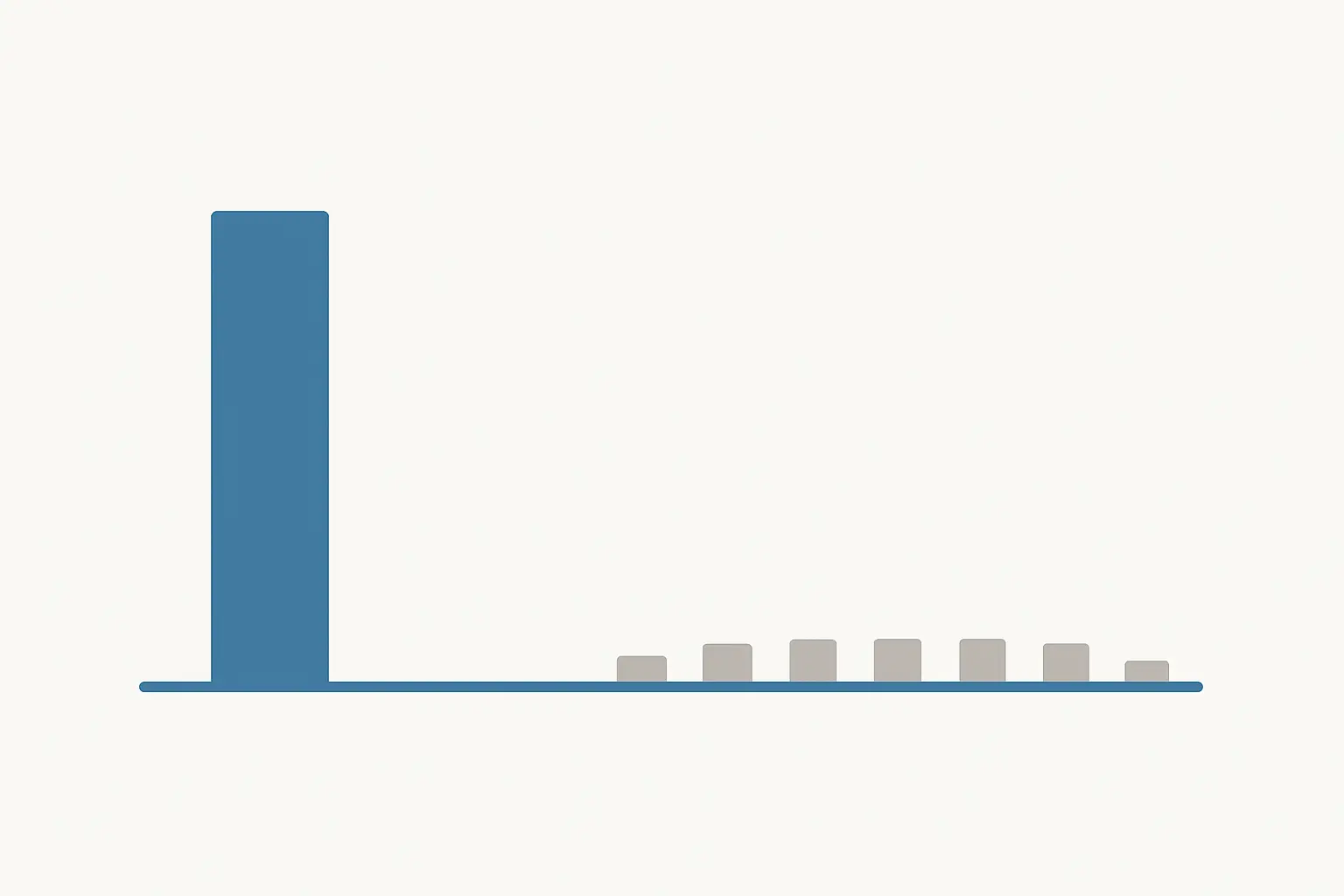
Finding two is the one to hold onto. High experimentation with no settled practice is not the same picture as high adoption, and it calls for different spending. It describes a population trying things rather than a population that has decided anything.
The support paradox, and what to do about it
Finding three deserves a section because it is counter-intuitive and it directly contradicts how most institutions are budgeting.
Aggregate demand for support is high. Demand for each specific service is low. Ithaka S+R names the consequence plainly: a dilemma for anyone investing in providing such services. Build a workshop programme from the aggregate number and you will be surprised by the attendance.
Three implications:
- A single flagship offering will underperform its business case. The demand is real but distributed, and no one service captures much of it.
- Discipline-specific support is what is actually missing. The 2025 cohort study found instructors and researchers “see a gap in discipline-specific support resources at their institutions.” Generic AI-literacy sessions are the format most easily supplied and the one least matched to the stated need.
- Top-down clarity is cheaper than services and more wanted. The same study found instructors “desire further top-down guidance related to student academic integrity and the formal integration of AI literacy into student general education.” Guidance is a document, not a service line — and it is the intervention with the best ratio of demand to cost.
That last point converts directly into an action: the components of the guidance instructors are asking for are set out in what a university AI policy should include, and the curriculum question in how to build an AI literacy curriculum.
What the interview study adds
Its six key findings are qualitative and should be read as reasoning rather than prevalence:
- Familiarity varies widely, but even those at the lower end “recognize the importance of improving their AI literacy levels.”
- Instructors are integrating basic AI skills into student activities themselves, while still working out how the technology serves course learning objectives — and whether those objectives should be reimagined.
- They want top-down guidance on student academic integrity and on formally integrating AI literacy into general education.
- Most researchers have already experimented, but far fewer have settled on productive long-term integrations. The same experiment-without-settling pattern as teaching.
- Researchers want clarity on ethical standards and best practices to maintain research quality and integrity.
- Both groups see a gap in discipline-specific resources and are “concerned about having secure, affordable access to generative AI tools”, with a need for more education on the product landscape.
That final concern — secure, affordable access — is a provisioning statement from the staff side, and it mirrors the provisioning gap already documented on the student side.
What these numbers cannot tell you
Four limitations to carry into any citation.
- A 3.9 percent response rate. 5,259 completions from 135,284 invitations. People with a view about AI are likelier to answer a survey about AI, which plausibly inflates both familiarity and experimentation.
- A skewed respondent pool. The survey reports a pool that is 75 percent white, 75 percent aged 45 and over, and 51 percent women. Since the study itself found older instructors less confident, the age profile matters for how the confidence findings are read.
- Both are North American. The survey covers four-year US institutions; the cohort study covers 19 institutions in the US and Canada. Applying either to a UK, German, Dutch or Spanish institution is an extrapolation and should be labelled as one.
- The interview study is not a prevalence estimate. 246 interviews with a representative sample of 45 analysed, coded thematically using a grounded-theory approach with inter-analyst agreement checked. It is well-conducted qualitative work and it produces no percentages — do not convert its findings into ones.
Reporting these alongside the headline is not hedging. It is what makes the 72 percent usable, and it is the same discipline that should be applied to student-side figures — see what student AI statistics actually measure.

The three questions worth asking locally
National figures establish that the phenomenon is large. They will not tell you what your own staff need, and the local instrument is cheap.
- Which specific tasks are staff using it for? The national data says the use cases are fragmented, so your distribution is genuinely unknown until you look.
- What is prohibited, by discipline? Humanities prohibition rates were notably higher. If that holds locally, a single institutional message will land differently across your faculties.
- What support would they actually attend? Ask about attendance, not interest. The support paradox is precisely the gap between those two questions.
Use a stable instrument so that next year’s answers are comparable with this year’s, and evaluate whatever you then provide rather than counting attendance at it — the method is in how to measure whether a writing support intervention actually worked.
If you would like to discuss what usage data a deployed institutional platform generates about staff and student practice, request an institutional evaluation.
Frequently asked questions
What proportion of instructors have used generative AI for teaching?
72 percent had experimented with it as an instructional tool, from a subsample of 2,654 US instructors surveyed between 7 February and 10 March 2024 and published by Ithaka S+R on 20 June 2024.
Is there an established way instructors use it?
No. The same survey found that while instructors use it in many different ways, no individual use case has become particularly well established.
How current is this evidence?
The fieldwork is from spring 2024 in both studies, despite one being published in May 2025. Cite the field dates rather than the publication dates.
Do instructors want institutional support?
Most want some support, but only a minority want any specific service — described by the authors as a dilemma for institutions investing in providing them.
What support is actually missing?
Discipline-specific resources, and top-down guidance on academic integrity and on integrating AI literacy into general education, according to the 2025 cohort study.
Do faculty prohibit student use?
Many do, especially in the humanities, according to the national survey.
What was the response rate?
3.9 percent — 5,259 completed responses from a sample of 135,284 faculty members, with 2,654 randomly assigned the generative AI question block.
Is the respondent pool representative?
It skews 75 percent white, 75 percent aged 45 and over, and 51 percent women. Given the finding that older instructors were less confident, the age profile bears on how that result is read.
Does this apply outside North America?
Not directly. One study covers four-year US institutions; the other covers 19 US and Canadian institutions. Applying either elsewhere is an extrapolation and should be labelled as one.
Can the interview study give us percentages?
No. It is qualitative — 246 interviews with 45 analysed in the representative sample, coded thematically. It explains reasoning; it does not estimate prevalence.
What about researchers rather than teachers?
The same pattern. Most had experimented, far fewer had settled on productive long-term integrations, and they wanted clarity on ethical standards to protect research quality and integrity.
What is the single most actionable finding?
The support paradox. It says that publishing clear guidance is likely to serve more staff, more cheaply, than launching another generic workshop series.