A chemistry or biology department running a full thesis cohort each cycle sees the same handful of objections recur draft after draft, supervisor after supervisor, without ever being written down as a shared checklist. The result is duplicated review effort: each supervisor independently rediscovers the same failure modes, corrects them one student at a time, and the department never builds the institutional memory that would let a methods office catch these earlier, before a draft ever reaches a supervisor’s desk. A department that names the five recurring patterns explicitly, once, and runs them as a pre-submission checklist turns a cost every supervisor pays every cohort into a one-time institutional artefact instead.
The objections that recur
Five patterns come up again and again in first-round feedback on chemistry and biology theses: a methods section that omits a specific reagent grade, instrument model or software version needed to reproduce the procedure; a results chapter presenting raw values with no stated measurement uncertainty or replicate count; a statistical test applied without checking whether its underlying assumptions (normality, independence, homogeneity of variance) actually hold for the dataset; a discussion chapter that states a causal claim the study’s own design cannot support; and a literature review that cites a superseded safety or classification standard as though it were current.
Why missing procedural detail is such a frequent first flag
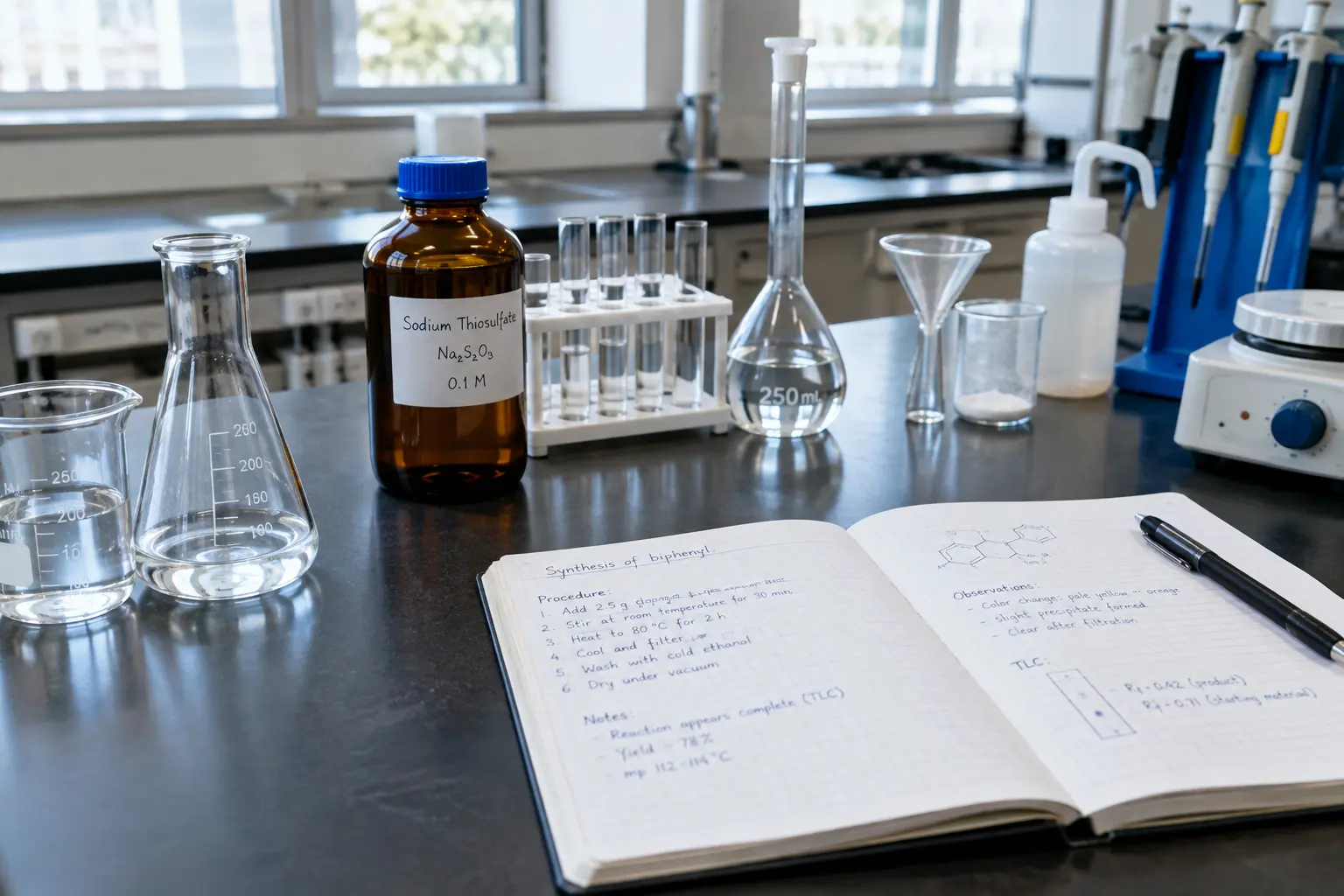
A chemistry or biology methods section needs enough specificity that another lab could attempt the same procedure and expect a comparable result — reagent grade and supplier, exact instrument model and settings, software version for any data-processing step, and replicate count. A methods section written at a level of generality suitable for a textbook, rather than a level specific enough for reproduction, is a quick route to a first-round rejection in this field, and it is also the easiest to prevent: a supervisor checklist that asks “could a colleague repeat this from the text alone” before submission catches it in minutes rather than after a full committee read.
Why uncertainty and replicate count matter as much as the headline value
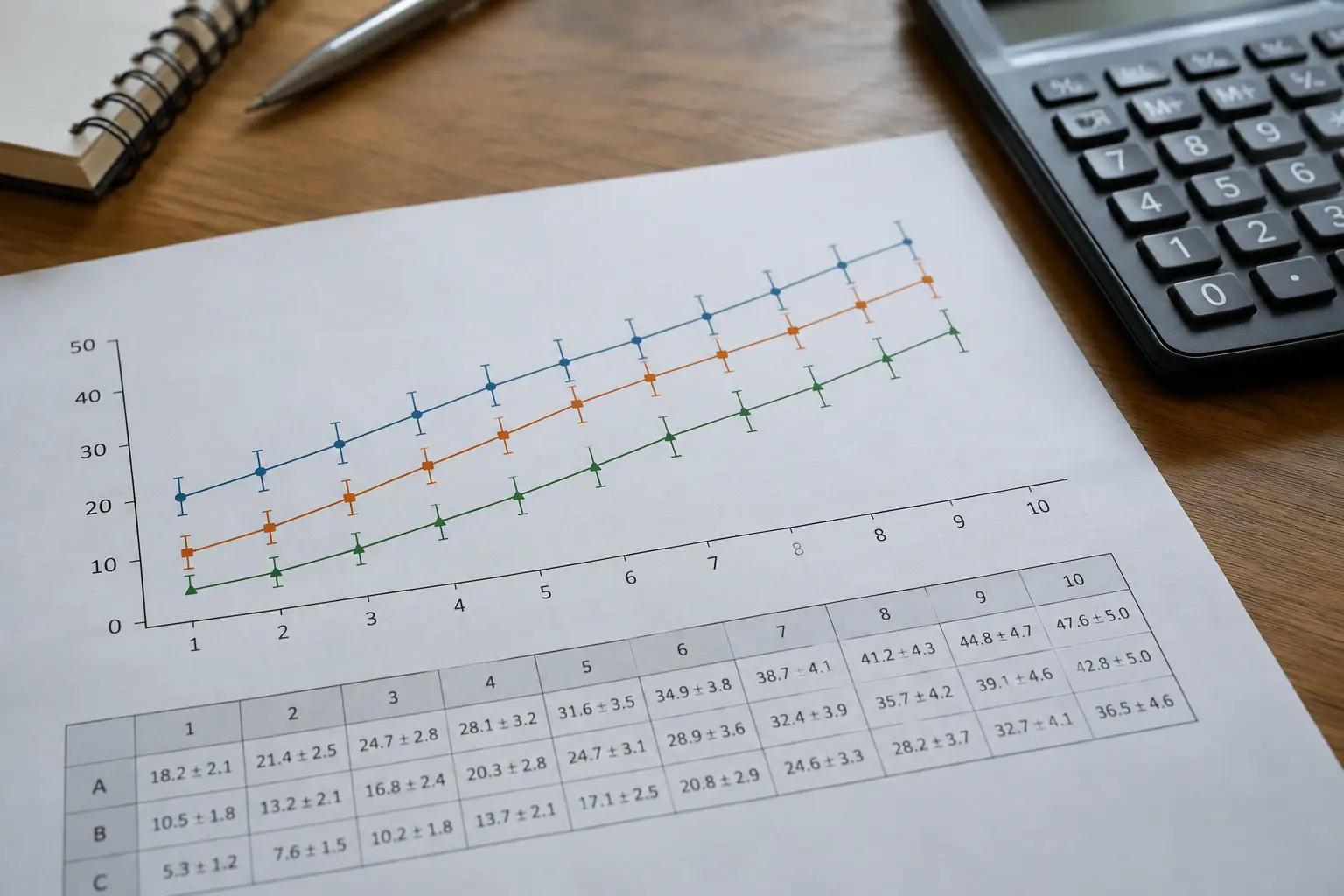
A results chapter reporting a single measured value with no stated uncertainty, standard deviation or replicate count reads as incomplete to an examiner trained in the field, regardless of how carefully the underlying experiment was actually run — the missing information is what the reader needs to judge whether the result is meaningful or noise. A checklist item requiring every reported quantitative result to carry an explicit uncertainty measure and replicate count, checked before the draft leaves the lab group, closes this gap without requiring a supervisor to re-derive it from raw data during review.
Why statistical assumption-checking gets flagged so consistently
A student who runs a parametric test without checking whether the data meet that test’s own assumptions — normality, independence of observations, homogeneity of variance, depending on the test — produces a result that may or may not be valid, and an examiner who spots an unchecked assumption will ask for the check before accepting the statistical conclusion. A supervisor checklist that requires a named assumption-check step, with its result stated in the methods or results chapter, turns this from a late-stage examiner objection into an early-stage, self-correcting step.
Why a discussion chapter overreaching its own design is a recurring flag
A discussion chapter that concludes “X causes Y” from a correlational or observational design, rather than the more limited claim the design can actually support, is a common and avoidable overreach. The fix is not weaker writing — it is a checklist question asked at draft stage: does the study design (controlled experiment versus observational study versus correlational analysis) support a causal claim, and if not, does the discussion chapter’s own language match that limit.
Why citing a superseded standard is worse than it looks
Safety data sheets, chemical classification systems and analytical standards are revised periodically, and a literature review or methods section that cites a superseded version — without noting it has been superseded — reads to an examiner familiar with the field as a sign the literature review itself may not be current. A checklist item requiring every cited standard, classification or safety reference to be checked against its current version before submission, not just cited from a remembered or previously used source, prevents this specific and easily-avoided flag.
What a supervisor checklist built from these five items looks like in practice
Five questions, checked against a draft before it leaves the lab group: does the methods section contain enough procedural detail for another lab to reproduce the work; does every reported quantitative result carry a stated uncertainty and replicate count; is there a named statistical-assumption check for every parametric test used, with its result stated; does the discussion chapter’s claims match what the study design can actually support; and has every cited standard or classification been checked against its current version. A draft that clears all five is not guaranteed to pass every other examination criterion, but a chemistry or biology methods office that runs this checklist consistently should see fewer first-round rejections tracing back to these five specific, recurring causes.
Where the checklist sits relative to lab safety and ethics sign-off
None of the five checklist items above substitute for the lab’s own safety approval or, where applicable, research-ethics clearance — those remain separate, earlier gates a proposal needs to clear before data collection begins. The checklist here operates later, at draft stage, on the write-up of work that has already been safely and properly conducted; a well-run safety and ethics process does not by itself guarantee a reproducible methods section or a correctly checked statistical assumption, which is exactly why a separate, draft-stage checklist is needed even in a department where the earlier gates are already working well.
What the pattern looks like across a cohort, not just one student
A methods office that starts logging which of the five objections recurs most often across a given cohort — rather than treating each rejection as an isolated, one-off correction — can target the pattern directly: a term where missing-uncertainty flags spike suggests the cohort’s statistics training needs reinforcing before the next intake’s proposal stage, not just correcting after the fact at draft review. Tracking the pattern, not just fixing each instance, is what turns a recurring review cost into a one-time upstream fix.
What this costs a department when it is left to individual supervisors
Without a shared checklist, each supervisor in a chemistry or biology department independently re-derives the same five failure modes across every cohort, correcting them student by student rather than catching them systematically before review. A methods office that writes the checklist once, and runs it as a pre-submission gate rather than leaving it to individual supervisor memory, converts a recurring per-student cost into a one-time institutional artefact — the same logic this site’s piece on structuring a nursing faculty’s thesis proposal-review workflow applies to a different field’s own recurring review bottleneck, and the same allocation question covered in how supervision hours are allocated across a cohort applies here too: a checklist that catches these five patterns before a draft reaches a supervisor frees up review time for the substantive methodological judgment a checklist cannot replace.
Building the checklist once, then handing it to every new supervisor
A new supervisor joining the department, or a postdoc taking on their first thesis student, has to learn these five patterns the same way every previous supervisor did — by encountering them, one rejected draft at a time — unless the department has already written them down. Handing a new supervisor the checklist at the start of their first cohort, rather than letting them rediscover it independently, is a small onboarding cost that pays back across every cohort that supervisor subsequently runs, and it is the difference between a department’s institutional knowledge living in individual supervisors’ heads versus living in a document anyone can reference and improve.

How this differs from a generic writing-quality check
Generic feedback on clarity and structure applies to a chemistry or biology thesis the same way it applies to any field, and the calibration question at the examiner level is covered separately in this site’s look at consistent marking of extended written work. The five objections above are different: they are field-specific substance problems — missing procedural detail, missing uncertainty, unchecked statistical assumptions, design-overreach, superseded standards — that a generic writing checklist will not catch, because they require domain knowledge of what a chemistry or biology methods and results chapter specifically needs to contain.
Where Tesify fits
The methodological and statistical judgment — whether a procedure is reproducible, an assumption check valid, a causal claim supported — stays with the supervisor and the lab group; none of it is a writing-platform decision. Once a draft has cleared these checks and a student is writing up the final text, Tesify is the platform candidates use to write their own thesis chapter by chapter: more than 9,000 students have written over 15,000 chapters with it, and the thesis stays 100% written by the candidate. See how Tesify supports a chemistry and biology thesis cohort.
Frequently asked questions
What is a frequent first-round objection to a chemistry or biology thesis draft?
A methods section that lacks enough procedural detail — reagent grade, instrument model, software version, replicate count — for another lab to reproduce the work from the text alone.
Why does a missing uncertainty measure matter if the underlying result is sound?
Without a stated uncertainty, standard deviation or replicate count, an examiner cannot judge whether the reported value is a meaningful result or within the range of ordinary experimental noise, regardless of how carefully the experiment was run.
What statistical assumptions should a checklist require students to check?
The assumptions specific to the test used — commonly normality, independence of observations and homogeneity of variance for parametric tests — with the check itself stated in the methods or results chapter, not just assumed.
Can a discussion chapter claim causation from an observational study?
No. A discussion chapter’s claims should match what the study design can actually support; an observational or correlational design supports an association claim, not a causal one.
Why does citing a superseded safety or classification standard raise a flag?
It signals to an examiner familiar with the field that the literature review may not be current, beyond the specific factual error of the outdated citation itself.
Should this checklist replace individual supervisor judgment?
No. It is a pre-submission gate that catches five recurring, field-specific failure modes before a draft reaches full review, not a replacement for the supervisor’s own substantive methodological judgment.
Does this checklist replace a lab’s own safety or ethics approval process?
No. Safety and ethics clearance remain separate, earlier gates a proposal needs before data collection begins. This checklist operates later, at draft stage, on the write-up of already-approved work.
How should a methods office use rejection patterns across a whole cohort?
By tracking which of the five objections recurs most often each term and using that pattern to target upstream training — a spike in missing-uncertainty flags, for example, points to a statistics-training gap worth addressing before the next cohort’s proposal stage, not only correcting the current draft.