
A law faculty needs four additions beyond the university’s generic AI policy: permission tiers that track how each assessment type exposes citation risk, an explicit alignment with the professional-conduct standard practising lawyers already face, treatment of AI embedded inside the legal research platforms students are trained on, and a separate governance track for live-client clinics.
Why isn’t the university policy enough on its own?
The university’s own policy — the nine generic components, the per-assessment permission table, a disclosure mechanism, the assistance-versus-intellectual-content test, burden of proof, equity, staff literacy, a review cadence and an appeals route, set out in what a university AI policy should include — is written to apply evenly across every faculty. That is its strength and its limit. A law faculty sits inside a second, external regulatory system that grades the same behaviour by a different standard: the rules of professional conduct its graduates will be admitted under. Nothing in a generic institutional policy tells a student that the verification habit they are building now is the same habit a bar disciplinary body will later hold them to as a licensed lawyer. The overlay exists to make that connection explicit rather than leave it implicit.
What does the legal profession’s own AI guidance change?
In July 2024 the American Bar Association issued its first formal ethics opinion addressing generative AI tools in legal practice, prompted in large part by a wave of sanctioned filings that began with Mata v. Avianca (S.D.N.Y. 2023). The opinion sets out duties around competence, confidentiality, communication with clients, candor to the tribunal, supervision of subordinate lawyers’ and staff’s AI use, and reasonable fees for AI-assisted work. California’s state bar had already published practical guidance on generative AI in November 2023; the Solicitors Regulation Authority and the Bar Council issued parallel risk guidance for England and Wales over the same period.
None of that guidance is aimed at students. But it is the standard the student in front of a law faculty today will be held to within a few years of graduation, and a law faculty’s own AI policy is the only place in the curriculum where that standard can be taught before it is enforced. The practical move is narrow: state, in the policy itself, that the verification and disclosure obligations set for coursework mirror the competence and candor duties a licensed lawyer already carries, and cite the professional source. That single sentence turns an academic integrity rule into training for a duty students will actually owe a court.
Why do hallucinated citations matter more here than anywhere else on campus?
A fabricated citation in an undergraduate essay is a grading problem. A fabricated citation in a legal document is a live professional-conduct event, because litigation documents are filed under rules — Federal Rule of Civil Procedure 11 in the United States, and equivalent certification rules elsewhere — that make the signer personally responsible for verifying the authorities cited. In Mata v. Avianca, the attorneys who filed a motion built on ChatGPT-generated case citations that did not exist were sanctioned $5,000 and had the case dismissed; the presiding judge described part of the submitted legal analysis as “gibberish.” Similar sanctioned filings have followed in multiple jurisdictions since, enough that legal-technology researchers now maintain running trackers of the pattern.
A law faculty policy that treats this only as a plagiarism-detection question misses the point. The skill being tested in a legal memorandum or a moot-court brief is not prose originality; it is the discipline of verifying that every cited authority exists, says what it is cited for, and remains good law. A policy overlay for law should name that skill directly, require students to produce a verification trail (a shepardizing or citator record, not just a citation list) for any brief or memo that uses AI-assisted drafting, and treat an unverified fabricated citation as a more serious integrity event than an unattributed sentence, because it is training the exact failure mode that produces courtroom sanctions. That verification trail also does double duty as the artefact record: it is exactly the kind of contemporaneous documentation that determines what evidence stands up when a student appeals an AI misconduct finding.
How should permission differ across a law programme’s own assessment types?
The university’s per-assessment permission table already establishes that different assessments carry different AI-exposure profiles, a principle set out for degree level in how AI governance should differ between doctoral work and coursework. Inside a single law programme the same principle needs a second pass, because the assessment types are unusually varied in what they are actually testing:
- Closed-book issue-spotting exams test recall and analysis under time pressure with no device access; the AI question barely arises.
- Take-home legal memoranda and case briefs test research and citation discipline; this is where the verification-trail requirement above belongs.
- Moot court briefs and oral argument test advocacy built on authorities the student can defend under live questioning; AI drafting assistance that the student cannot orally defend when a judge probes a citation should fail the assessment on its own terms, independent of any integrity finding.
- Client interview and negotiation simulations test judgment and interpersonal skill that AI cannot meaningfully substitute for, which makes them a comparatively low-risk category for the policy to spend less time on.
A single blanket rule across these four categories either over-restricts the exam room, where the risk barely exists, or under-restricts the brief, where the risk is highest. The overlay should assign each category its own permission tier rather than inherit the university’s default tier unmodified.
Does AI built into Westlaw and Lexis count under the policy?
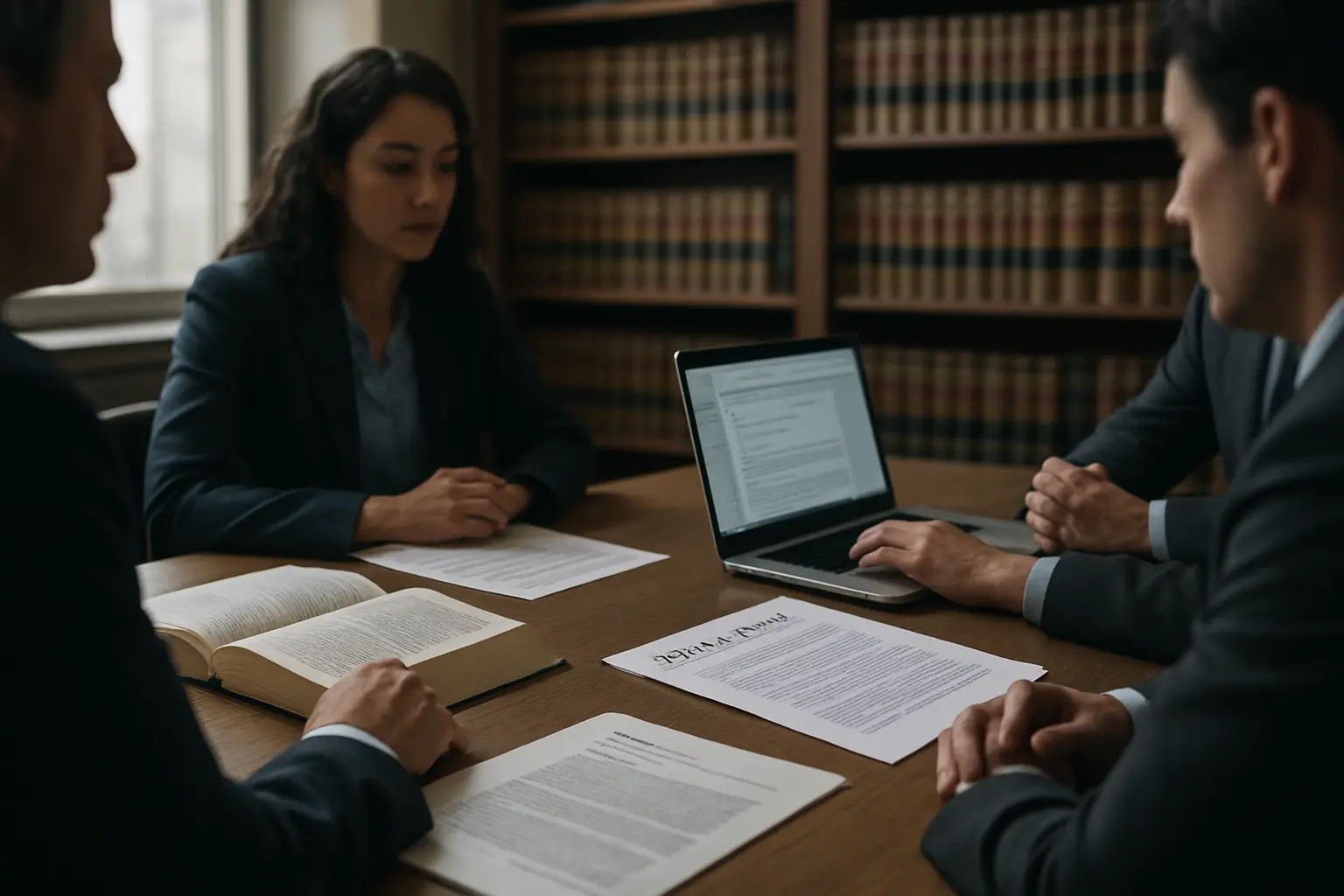
Most generic AI policies are written with a standalone chatbot in mind. Legal research is no longer standalone: Westlaw and LexisNexis have each built generative AI research assistants directly into the platforms every law student is trained to use for legal research, so a student can generate an AI-drafted case summary or an AI-suggested argument without ever opening a separate AI tool. If the policy’s disclosure mechanism only asks “did you use an AI tool,” a student can answer no in good faith while having used exactly the capability the policy meant to govern.
The fix is definitional, not procedural: state explicitly that AI features embedded in a licensed legal research platform are in scope for disclosure on the same terms as a standalone tool, and give one or two named examples so the boundary is not left to a student’s own judgment about what counts as “AI.” This is also the point at which procurement and academic policy intersect — the questions a law faculty should be asking its research-database vendor about what its AI features actually do sit alongside the broader vendor question set in the procurement question bank for an AI writing vendor.
Why do clinics need a separate track from the classroom rule?
A doctrinal course’s AI policy is an academic integrity instrument. A live-client clinic is something else: the student is functioning, under supervision, inside the actual rules of professional conduct that govern the supervising attorney, on behalf of a real client whose matter carries real confidentiality obligations. Putting a client’s facts into a public AI tool in a clinic is not an academic integrity breach to be routed through the disclosure-and-appeals process built for coursework — it is a potential breach of the duty of confidentiality that the supervising attorney is personally answerable for, which is a different office, a different threshold and frequently a different timeline than the academic integrity process handles.
The overlay should say so in one explicit clause: clinic placements are governed by the supervising attorney’s professional-conduct obligations first, and the faculty’s academic AI policy second, with a named point of escalation that is not the academic integrity office. Where a clinic uses any AI-assisted drafting tool at all, that tool’s data-handling terms need the same scrutiny given to any platform touching student data, of the kind set out in what a lawful basis for deploying an AI tool on student data actually requires — except here the data in question can belong to a client who never consented to anything.
What should the overlay actually add, item by item?
Five additions, layered on top of the university’s nine generic components rather than replacing any of them:
- A professional-standard citation. One sentence naming the jurisdiction’s current professional guidance on generative AI (the ABA opinion in the United States, the SRA and Bar Council guidance in England and Wales, or the equivalent body in the target jurisdiction) as the standard the coursework rule is training toward.
- A verification-trail requirement for any brief or memorandum that used AI-assisted drafting, distinct from the general disclosure statement the university policy already requires.
- Four assessment-specific permission tiers — exam, memorandum/brief, moot court, and clinical/simulation — replacing the single default tier inherited from the university table.
- An explicit definition of in-scope AI that names embedded research-platform features alongside standalone chatbots.
- A clinic carve-out that routes any AI-and-confidentiality question to the supervising attorney and the professional-conduct process, not the academic integrity office.
None of the five requires touching the university’s existing burden-of-proof standard, appeals route or review cadence, which is precisely why an overlay rather than a rewrite is the right shape for a law faculty’s response.
How should a law faculty phase this in?
The lowest-friction sequence is the clinic carve-out first, since it addresses a live confidentiality exposure rather than a classroom rule; the assessment-tier table second, timed to the next syllabus revision cycle so it reaches students before the exam-period rules are set; and the professional-standard citation and embedded-AI definition last, since both are single clauses that can be added to the existing policy document without a full committee re-approval. A one-semester pilot in a single required course — legal writing is the natural choice, since it already carries the citation-verification skill the overlay is built around — lets the faculty test the assessment tiers before extending them programme-wide.
If you would like help building this overlay against your own law faculty’s existing policy and assessment map, request an institutional evaluation and we will work from your current document rather than a template.
Frequently asked questions
Does a law faculty need its own AI policy, or is the university policy sufficient?
The university policy remains the base document. A law faculty needs a short overlay addressing professional-standard alignment, citation verification, embedded research-platform AI and clinic governance — additions, not a replacement.
What is ABA Formal Opinion 512 and why does it matter to a law school?
It is the American Bar Association’s first formal ethics opinion on lawyers’ use of generative AI, issued in July 2024, covering competence, confidentiality, candor to the tribunal, supervision and fees. It matters to a law school because it is the professional standard current students will be held to shortly after graduation.
What happened in Mata v. Avianca?
Attorneys filed a federal court motion containing case citations fabricated by ChatGPT. The court could not locate the cited cases, sanctioned the attorneys $5,000 under Rule 11, and dismissed the underlying case. The 2023 Southern District of New York decision is the reference point most subsequent AI-citation sanctions cases cite.
Should embedded AI features in Westlaw or Lexis be treated the same as ChatGPT under the policy?
Yes. Both platforms now offer generative AI research features built into tools students already use, and a disclosure rule that only names standalone chatbots will miss most actual use. Name embedded features explicitly as in scope.
Why treat moot court differently from a take-home memorandum?
Moot court requires the student to defend a cited authority under live oral questioning. AI-assisted content the student cannot defend under questioning fails the exercise on its own terms, independent of any separate integrity process.
Does a law clinic need a different process than a doctrinal course?
Yes. A clinic involves a real client and the supervising attorney’s own professional-conduct obligations, particularly confidentiality. An AI-and-confidentiality question in a clinic should route to the supervising attorney and the professional-conduct process, not the academic integrity office.
Does the overlay require rewriting the university’s AI policy?
No. It is designed as five additions layered on the university’s existing nine-component structure, none of which requires changing the base burden-of-proof standard, appeals route or review cadence.
What is the single highest-priority addition for a law faculty to make first?
The clinic carve-out, because it addresses a live client-confidentiality exposure rather than a classroom integrity question and does not need to wait for a syllabus revision cycle.
Do UK law schools have an equivalent professional standard to cite?
Yes. The Solicitors Regulation Authority and the Bar Council both issued generative AI risk guidance for practitioners in England and Wales in the same period as the ABA opinion, and either can serve as the named professional-standard reference in a UK law faculty’s overlay.
How often should the overlay be reviewed?
On the same cadence as the university’s base policy, plus an out-of-cycle review whenever the relevant bar or law society issues updated generative AI guidance, since that guidance is what the overlay is built to track.