
You can recruit a case officer. You cannot recruit a panel.
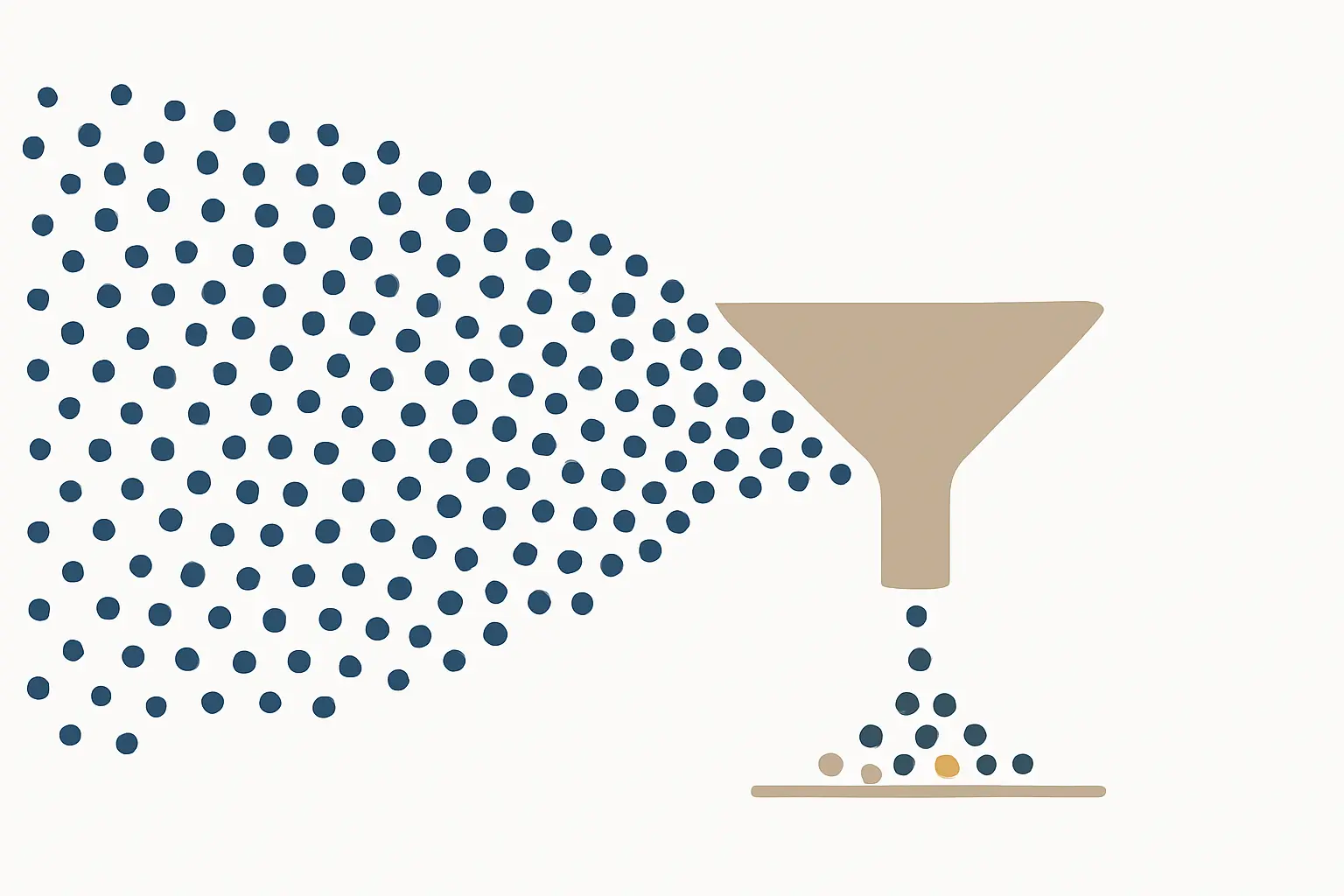
That sentence is the whole problem. Integrity work has two queues, and only one of them responds to money. Administrative capacity — intake, correspondence, scheduling, record-keeping — can be bought. Panel capacity is set by how many academic colleagues will sit in a room and adjudicate a case on top of a full teaching, research and supervision load, and no budget line changes that number.
So when the caseload rises, the intake queue can be cleared and the hearing queue still lengthens. Students wait months for an outcome, a marking board sits with provisional results, and the people who agreed to serve start declining next year.
The arithmetic nobody puts in the annual report
A single contested case is not one meeting. Counted honestly, it is:
- Intake and triage by the integrity office
- Investigation and evidence assembly
- Notifying the student and allowing a response period
- Scheduling three or more academics who share no free hour
- The hearing itself
- Writing and issuing the decision
- The appeal window, and the appeal if it comes
Steps four and seven are where time actually disappears. Step four is a diary problem that scales badly — finding a common slot for three busy academics is disproportionately harder than finding one for two. Step seven is invisible in caseload figures because an appeal is usually counted as part of the original case while consuming a second full cycle with different people.
Now multiply by a caseload that has grown. The output does not rise in proportion, because the constraint is not the number of cases — it is the number of available hearing hours, which has not moved.
Three responses that do not work
Adding detection. This is the most common response and it makes the queue longer. A detector produces a probability about a text, not evidence about conduct, so every flag has to be corroborated before it can become an allegation. At institutional submission volumes even a low false-positive rate generates a large absolute number of inquiries into work that was entirely the student’s own — the base-rate arithmetic is worked through in whether AI detection is reliable enough to base a case on. You have bought more inflow into a channel that was already the bottleneck.
Lowering the threshold for a hearing. Sending more matters to a panel to be seen to be rigorous consumes the scarcest resource on the least contested cases, and it degrades the quality of attention available for the serious ones.
Reading the caseload as a misconduct trend. A rising number tells you about detection and reporting behaviour before it tells you about student conduct. Building a business case on the assumption that misconduct doubled will not survive contact with someone who knows what the figure measures — the distinction is set out in why integrity violation statistics measure enforcement rather than misconduct.
The only lever that scales
If capacity is fixed and cannot be bought, the remaining variable is what arrives. That is an upstream question, and it has three parts.
1. Rules a student can find while writing
A meaningful share of cases are not deception. They are students who did not know where the line was, in a system where the line is set per assessment and published somewhere they were not looking. A rule that cannot be located at the moment of writing is not operative, and it generates cases at the point of submission. The components that make a rule findable and enforceable are in what a university AI policy should include.
2. Assessment that leaves a trail
The hardest case to adjudicate is one whose only artefact is a finished document at a deadline. There is nothing to inspect but the text, which is why the conversation turns into an argument about a score. Where drafts, revisions and supervision exchanges exist, authorship questions usually resolve in a fifteen-minute conversation rather than a hearing.
3. Support before submission, not adjudication after it
Where students cannot get help with the writing itself, they buy it privately and invisibly, and that purchase is where a large share of the cases originate. The market they enter is described in institutional writing support versus external editing services, and the capacity constraint that pushes them there is in the writing centre waiting list you cannot staff your way out of.

What Tesify for Institutions changes, specifically
We are a writing platform, not a screening tool, and the honest claim is a narrow one: we act on inflow rather than on adjudication.
- The work happens where you can see it. Because drafting takes place in the platform rather than in a private document, a supervisor sees progress rather than only an outcome. Most authorship questions never become cases because they surface as a conversation in week six.
- Process evidence is a by-product, not a reporting task. Drafts and revision history accumulate without anyone being asked to file anything. When a question does arise, the panel has something inspectable — which is the difference between a hearing and a fifteen-minute discussion.
- Structure and references stay consistent across a document too long to hold in your head, which removes a category of formatting-driven supervision time from staff and a category of citation errors from the caseload.
- Support is available at the moment of writing, which is the substitute for the privately-purchased, invisible help that generates the hardest cases.
- It sits alongside your detection contract. We do not ask you to displace a working similarity licence, and a business case built on that displacement would not survive year two.
What we do not claim: that this eliminates misconduct, or that any tool can. Deliberate deception will continue and panels will still be needed. The claim is that a meaningful share of the current load is not deliberate deception, and that share is addressable before it becomes a case.
Start with a free departmental pilot
Not because it is cheaper, but because of what it commits and what it produces.
What it commits: coordination time and success criteria agreed in advance. No budget, no procurement cycle, no governance calendar.
What it produces: usage evidence from your own population, an integration you have built rather than been shown, staff feedback against criteria you set, and — if you instrument it properly — a defensible read on whether inflow changed. Pick one department with a known caseload, agree what you are measuring before it starts, and run it for a full assessment cycle.
The pilot design is in how to run a departmental pilot of an AI writing tool, and the evaluation method that turns it into a finding rather than an impression is in how to measure whether a writing support intervention actually worked.

If your hearing queue is longer this year than last, the useful conversation is about inflow rather than throughput. Request an institutional evaluation and we will scope a free departmental pilot against a department you name, with the measurement agreed before it starts.
Frequently asked questions
What does an institutional licence cost?
It depends on population, scope and term, and no vendor in this category publishes a static institutional price. We will quote against written assumptions you set, so the figure is comparable with any other quotation you hold. What to require in that agreement is set out in what an institutional licence should actually buy you.
Where is our data processed?
Processing locations are set per institution in the data processing agreement rather than asserted on a webpage, and we will supply the sub-processor list with the location of each. Why that distinction matters is covered in where your students’ text is actually processed.
How do you handle GDPR and FERPA?
Through the data processing agreement, with a documented lawful basis, a minimised field set, a stated retention period and a sub-processor list. Run it through your standard review rather than ours — the sequence is in how to run a data protection review.
Is student work used to train models?
Retention and training are two separate permissions and both are answered expressly in the agreement. Treat any vendor that answers only one of them as having answered neither.
How much integration effort is involved?
SSO and standards-based LMS integration, which should not carry a separate implementation fee. A pilot can run on a narrower configuration than a full deployment.
Is this not just helping students produce work they did not write?
The opposite is the design intent. The platform makes the production of a document visible and leaves a record of how it came to exist, which is what an integrity process actually lacks. A tool that produced finished text with no trail would make your problem worse, and that is not what this is.
Will this replace our detection contract?
No, and we would not propose it. Screening examines work after submission; support changes how it is produced. A saving-based case built on displacement fails at renewal.
Can it prove a student wrote their own work?
It cannot prove authorship, and no tool can. It supplies process evidence a panel can inspect, which is considerably more than a probability score offers.
How long before we would see any change in caseload?
A full assessment cycle at minimum, because the outcome you care about occurs at submission. Measure a proximal indicator in the meantime rather than waiting silently.
What if our caseload is rising because detection improved?
Then your number is measuring enforcement, and you should say so in the report. It also means the upstream argument is stronger, not weaker, because more of the inflow is recoverable before it becomes a case.
Which department should pilot it?
One with a known caseload and a willing head. Avoid the department with the worst problem for a first pilot; you want a fair test, not a rescue.
What does the pilot commit us to?
Coordination time and pre-agreed success criteria. No budget, no procurement cycle, and it can run alongside every contract you currently hold.