An Environmental Science thesis is one of the few document types a graduate school cannot approve on the strength of the proposal alone — the sampling plan usually depends on a site the student does not own, a permit the institution does not hold, and a risk profile a desk-based ethics committee is not equipped to evaluate. Where a psychology or business thesis’s approval chain ends with an ethics committee, an environmental science thesis’s approval chain has to run through site access, biosafety or permitting, and fieldwork risk assessment before a single sample can be taken. Here is how to structure that chain so it protects students and holds up to institutional and funder scrutiny, without becoming the bottleneck that pushes fieldwork into the wrong season.
Step 1 — Separate the three approvals a fieldwork-based thesis actually needs
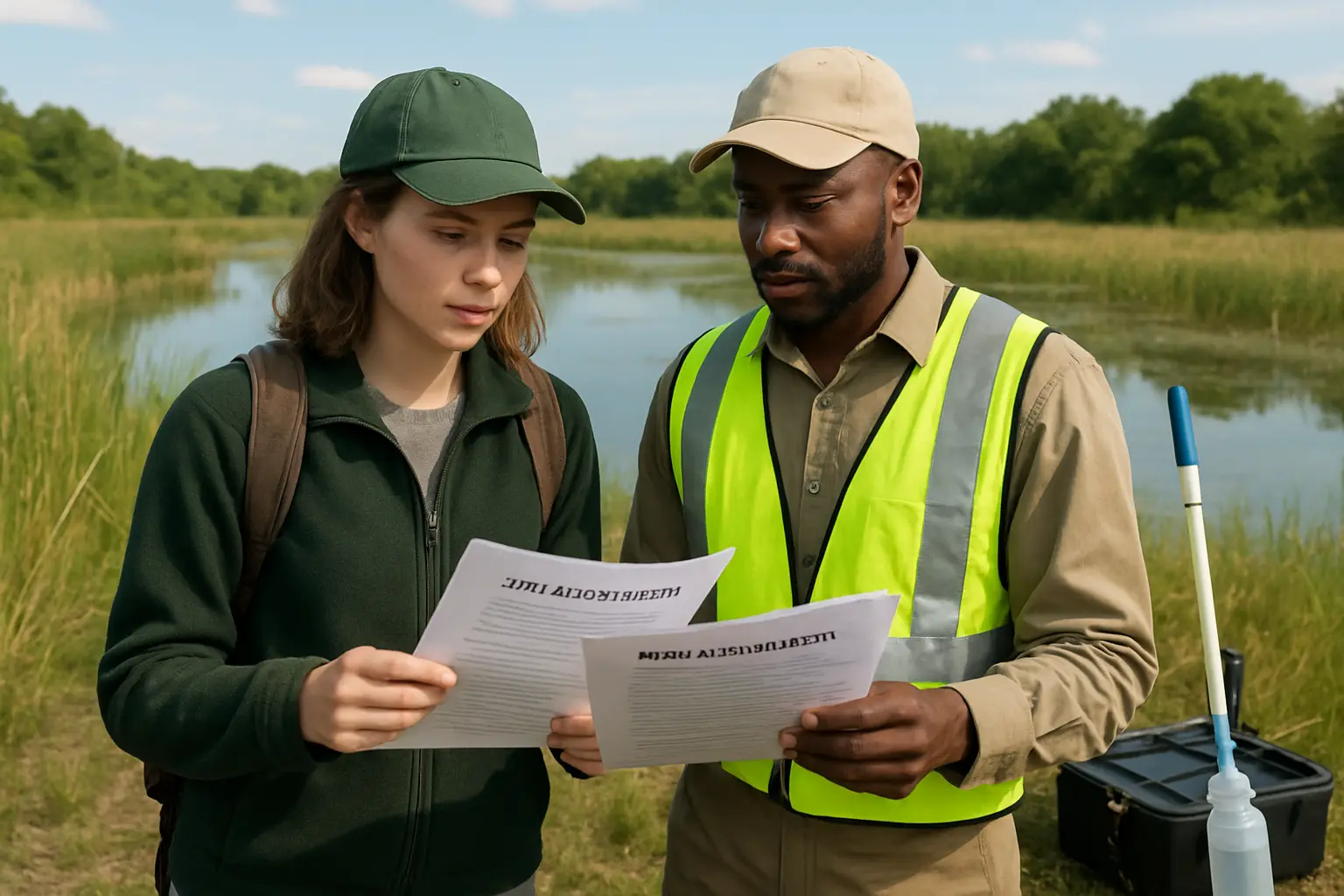
Treating fieldwork sign-off as a single “ethics approval” step, the way a survey-based social-science thesis would, is the most common structural mistake a graduate school makes with this cohort. Three genuinely separate approvals are usually required, from three different bodies, and a student needs all three before sampling can start: research ethics or institutional review (where the work involves any human-subject element, such as interviewing landowners or community members alongside the environmental sampling — the routing logic is the same one covered for a different discipline in how psychology routes ethics approval, though the trigger conditions differ substantially by field); site access and permitting (landowner consent, a protected-area permit where the site sits inside a designated conservation area, or a specimen-collection permit where sampling removes material from the site); and fieldwork health-and-safety risk assessment (lone-working policy, environmental hazard assessment, emergency-contact and check-in procedures). Naming these as three separate, parallel-track approvals in the programme handbook — rather than one undifferentiated “ethics form” — is what lets a student start the slower approvals early instead of discovering the permit process midway through a term.
Step 2 — Build a site-access and permitting checklist specific to protected and regulated land
Where a proposed sampling site sits inside a nationally or internationally designated conservation area — a UK Site of Special Scientific Interest, a Natura 2000 site in the EU, a US National Park or Wilderness Area, or an IUCN-categorised protected area elsewhere — sampling, specimen collection or even access itself typically requires a separate permit from the land manager or regulatory authority, issued on a timeline the institution does not control and cannot expedite. A checklist a supervisor and student can work through before a proposal is finalised: is the site privately owned, and if so, has written landowner consent been obtained; is the site within a designated protected area, and if so, which authority issues sampling permits and what is its current processing time; does the sampling method involve removing, disturbing or collecting a protected species or habitat feature, which may trigger a separate species licence requirement distinct from general site access; and does the work cross an international border for fieldwork or specimen transport, which raises a CITES permit question for any protected species material being moved. A thesis timeline that assumes a permit will arrive within the same term it was requested is the single most common cause of fieldwork-thesis delay this checklist is designed to prevent.
Step 3 — Route the risk assessment through the institution’s fieldwork safety policy, not the generic ethics form
Most UK and US research-intensive universities maintain a dedicated fieldwork or off-campus activity safety policy, separate from the standard human-subjects ethics process, because the hazard profile is different: environmental exposure, lone or remote working, water or terrain hazards, wildlife contact, and reduced access to emergency services. A student and supervisor completing only the standard ethics form and skipping the fieldwork-specific risk assessment is the second most common process failure in this space, and it is usually a signposting failure rather than a deliberate skip — the fieldwork policy frequently sits in a different part of the institution’s intranet, owned by health and safety rather than the graduate school or research ethics office. Fixing this is mostly an information-architecture problem: the thesis-proposal template itself should link directly to the fieldwork risk-assessment form and require it as a named, separate attachment before a proposal is approved, not leave a student to discover the requirement independently.
Step 4 — Size supervisor caseload for the fieldwork season, not the academic year

Environmental Science fieldwork clusters into defined windows — a growing season, a breeding season, a dry season for a specific sampling method — that rarely align neatly with an academic term, and a supervisor with several fieldwork-based students often has all of them needing site visits, permit sign-off and safety-plan review in the same compressed window. This is the field-specific version of the seasonal capacity problem already documented for taught masters dissertation season on this site, and it argues for the same fix: a graduate school should map its fieldwork-based thesis cohort against the actual sampling calendar for their sub-field, not assume supervision demand is flat across the year, and should staff site-visit and permit-review capacity for the peak rather than the average.
Step 5 — Decide who signs off on last-minute site or method changes
Field conditions change: a permit is delayed, a site becomes inaccessible, a landowner withdraws consent partway through a season. A programme needs a named, fast-track sign-off route for a minor site or method substitution that does not require the full proposal-approval cycle to be repeated from scratch — typically the supervisor plus a designated fieldwork safety officer, empowered to approve a like-for-like substitution (a comparable site with an existing permit, say) without reconvening a full committee, while still routing any substantive change in method, species or protected-area status back through the full three-approval process in Step 1. Without this fast-track route, a mid-season site change can cost a student an entire sampling season waiting for a committee cycle that was designed for the original proposal, not an emergency substitution.
Data management and deposit obligations that start at the sampling design stage
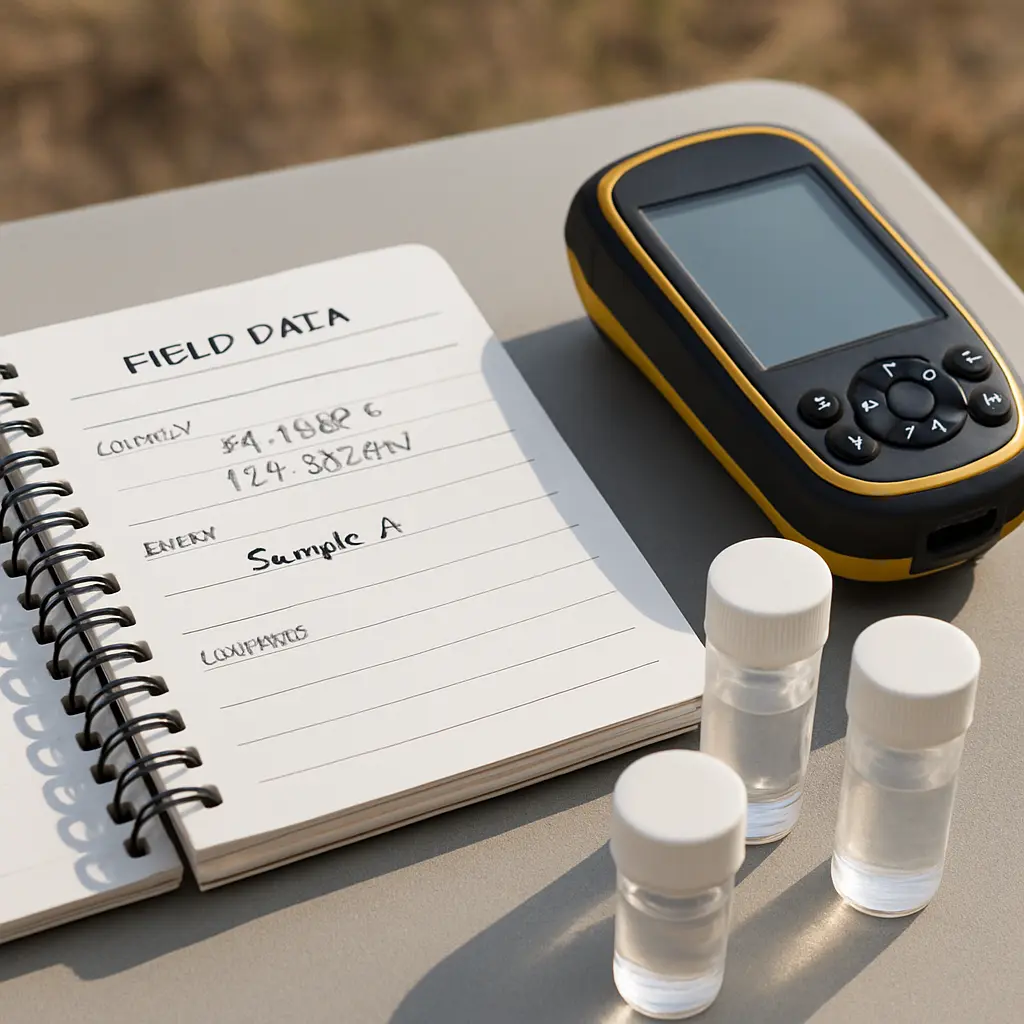
Most funders and many institutions now require a data management plan before fieldwork begins, not after the thesis is written — and for environmental sampling this typically means specifying in advance how raw field data, GPS coordinates, specimen records and any imagery will be stored, anonymised where a site location is sensitive (a rare-species location, for instance, which may need to be generalised or withheld in the published thesis even though the precise coordinates are recorded in the underlying dataset), and eventually deposited in a recognised repository. Building this into the same proposal-approval stage as the three approvals in Step 1, in the same spirit as how to write a departmental writing standard for theses sets expectations before drafting begins, rather than treating it as a write-up-stage afterthought, avoids the common failure where a student discovers a repository’s format requirements only after months of fieldwork have already produced data in an incompatible structure. A supervisor should confirm at proposal stage which repository the field aligns with — a national biodiversity database, an institutional data repository, or a funder-mandated one — and what metadata standard it expects.
International and multi-site fieldwork: a heavier version of the same chain
Where sampling spans multiple countries or involves a partner institution abroad, every approval in the template below effectively doubles: a home-institution ethics and safety sign-off, plus the host country’s own permitting and, frequently, a formal material transfer agreement or research collaboration agreement between the two institutions before any specimen or data can legally cross the border. This is where the CITES question from Step 2 becomes most consequential, and where the lead time in the approval-chain table below should be treated as a floor, not a typical case — multi-country environmental fieldwork proposals routinely need six months or more of lead time on the permitting and inter-institutional agreement alone, well before any funding or ethics clock starts.
A template approval-chain table
| Approval | Typical owner | Typical lead time | Triggers it |
|---|---|---|---|
| Research ethics / institutional review | Research ethics committee | Weeks | Any human-subject element (interviews, community engagement) alongside the sampling |
| Site access and landowner consent | Student, with supervisor sign-off | Days to weeks | Any private or non-university land |
| Protected-area or species sampling permit | External regulator or land-management authority | Weeks to months | Site inside a designated conservation area, or a protected species involved |
| Fieldwork health-and-safety risk assessment | Fieldwork safety officer or departmental H&S lead | Days to weeks | Any off-campus or remote sampling activity |
These are illustrative lead times for a programme to sanity-check against its own regulator and institution, not a fixed external standard — permit processing time in particular varies enormously by jurisdiction and authority, which is exactly why Step 1’s early, parallel-track approach exists.
Where Tesify fits
None of the approvals above are something an AI writing platform can shortcut, and a fieldwork-based thesis should never be approved faster than its permits allow. Where Tesify does help is once sampling is complete and the student is writing the methodology and results chapters: the Tesify Citation Engine for Institutions keeps site, permit and dataset citations consistent with the faculty’s required style as the write-up proceeds, so supervisor review time goes to the sampling design and results rather than reference formatting. A free departmental pilot lets one programme test this against a single fieldwork cohort’s write-up season.
Frequently asked questions
Does an Environmental Science thesis always need a separate site-access permit?
Only where the site is not university-owned, or sits inside a designated protected area, or the sampling method removes or disturbs a protected species or habitat feature. A campus-based or already-permitted institutional field station may not require a new permit for every project.
Who owns the fieldwork risk assessment — the ethics committee or health and safety?
Typically a dedicated fieldwork or off-campus activity safety policy owned by health and safety or a departmental fieldwork safety officer, separate from the standard human-subjects ethics process. Naming this explicitly in the proposal template prevents it being missed.
How early should a student start the permitting process?
As early as the proposal stage, in parallel with ethics review rather than after it — permit processing time for a protected-area or species licence can run to months and is usually the longest lead time in the whole approval chain.
What happens if a permit is delayed past the planned sampling season?
This is exactly the risk Step 5’s fast-track substitution route addresses: a supervisor and fieldwork safety officer can approve a like-for-like site or method substitution without a full committee cycle, while a substantive change still needs full re-approval.
Does fieldwork outside the country require a CITES permit?
Only where protected species material is being collected and transported across an international border. Confirm current requirements with the relevant national CITES management authority before finalising a cross-border sampling plan — this is not a rule to assume from a previous cohort’s experience, since permit regimes change.
Should supervisor caseload be planned around the academic year or the sampling season?
The sampling season. Environmental Science fieldwork clusters into defined ecological windows that rarely align with academic terms, and a graduate school that staffs supervision at a flat annual average will be under-resourced at the actual fieldwork peak.